The Tap Guide
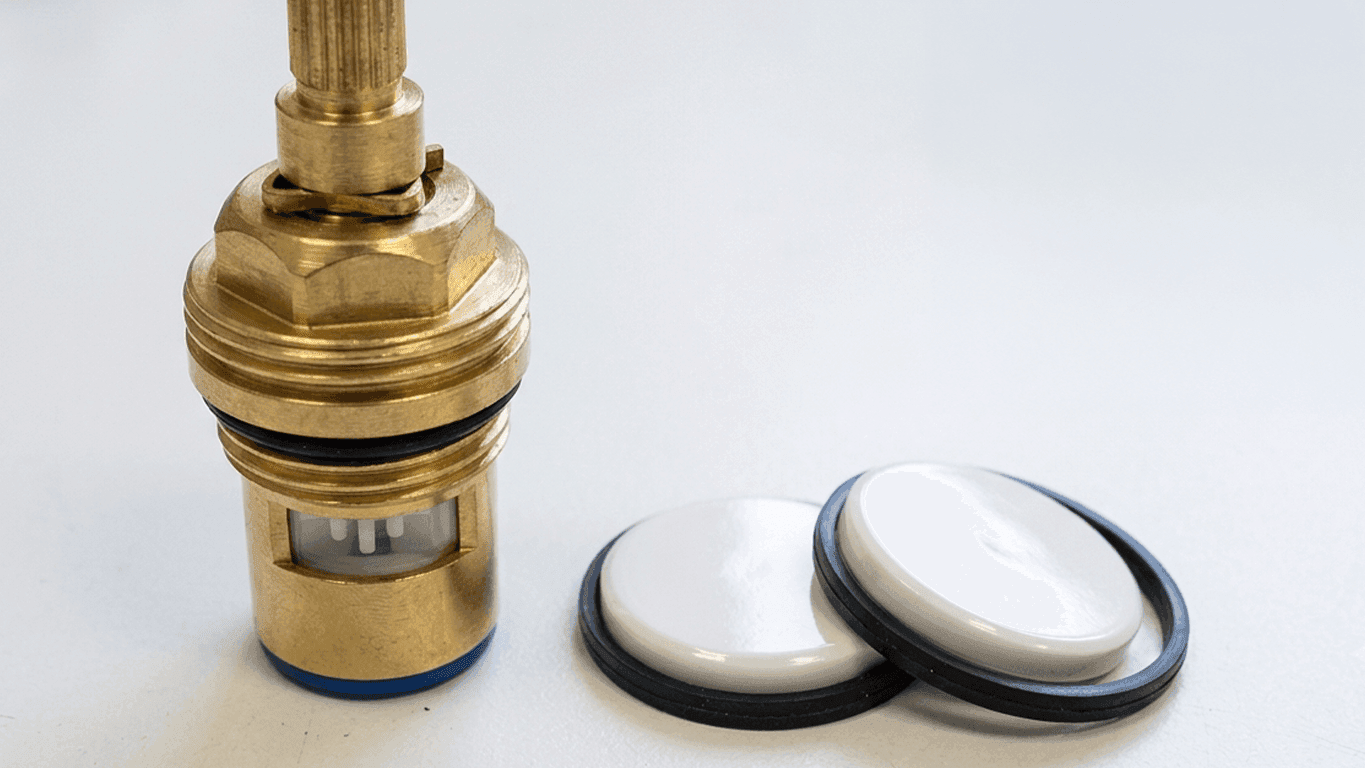
If you've looked at a tap's specification recently, you've probably spotted the phrase "ceramic disc" somewhere in the description, usually presented as a selling point without much explanation of what it actually means. Here's what's really going on inside the tap, and why it matters for how the tap feels and how long it lasts.
It's worth understanding properly if you're comparing taps, since a ceramic disc cartridge is one of the biggest genuine differences between a cheap tap and a more expensive one, and it directly affects how smooth the tap feels to use and how long it lasts before anything needs replacing.
The basic idea
Inside a ceramic disc tap sit two flat discs, made from a very hard, precisely machined ceramic, sitting face to face with tiny channels cut into them. As you move the handle, one disc rotates or slides slightly against the other, lining up or blocking those channels to control both how much water flows and how much hot and cold gets blended together.
It's a neat bit of engineering, since a single lever movement is doing two jobs at once, adjusting flow and temperature simultaneously, using nothing more than two hard surfaces sliding against each other rather than a compressible rubber seal.
How it differs from a traditional washer tap
A traditional tap uses a rubber or fibre washer that compresses against a valve seat to stop the flow, and you have to turn the handle a full rotation or more to fully open or close it. Ceramic disc taps need only a quarter turn, or a short lever movement, to go from fully off to fully on instead, which is why single lever mixer taps feel so much quicker and easier to use one handed.
The feel is the easiest way to tell the two apart without opening anything up. A washer tap has some resistance and a definite endpoint as you tighten it shut. Ceramic disc tap handles move smoothly with very little effort throughout their whole range instead.
Why ceramic discs tend to last longer
Ceramic is extremely hard and resistant to wear compared with rubber, so the discs themselves don't compress, perish or harden with age the way a traditional washer eventually does. That's the main reason ceramic disc taps have become the standard for modern single lever taps, since the core mechanism holds up for years of daily use without the gradual, predictable wear pattern washers go through.
This doesn't mean a ceramic disc cartridge lasts forever or never causes problems, just that when it does go wrong, it's usually for a different reason than a washer would fail, covered further down.
Single lever vs two handle ceramic disc taps
Most ceramic disc taps use a single lever controlling both flow and temperature, which is the configuration most people picture when they hear the term. It's also possible to have a two handle tap that still uses ceramic disc cartridges internally, one on the hot side and one on the cold, giving the smooth, low-resistance feel of ceramic discs while keeping a more traditional look with separate handles.
What can still go wrong with a ceramic disc tap
The most common issue is limescale or a tiny bit of grit getting between the two disc faces, stopping them sealing perfectly flush against each other even when the lever's fully off. Unlike a worn washer, which gets replaced outright, a ceramic disc cartridge with this problem can sometimes be cleaned and reused, since the discs themselves haven't actually worn out, just picked up debris.
If cleaning doesn't resolve a drip, the cartridge has likely worn or become etched from mineral deposits over a long period, at which point it needs replacing as a whole unit rather than repairing part by part. Our guide on fixing a dripping tap covers the full process for both traditional and ceramic disc taps side by side.
Recognising one in your own home
If you've got a single lever mixer tap in your kitchen or bathroom that moves easily with barely any resistance, you almost certainly have a ceramic disc cartridge inside already, even if you've never thought about it. Separate hot and cold handles that need a full turn to operate point to a traditional washer tap instead, and our guide on replacing a tap washer is the one you'll want.
Not all ceramic discs are made equally
Just because a tap's spec sheet mentions ceramic disc technology doesn't mean every model performs the same. The discs themselves need to be machined to very tight tolerances, since even a tiny gap or an imperfectly flat surface stops them sealing properly, and cheaper manufacturing processes tend to produce discs with slightly looser tolerances than premium ones.
In practice this shows up as a subtle difference in feel rather than an obvious fault. A well made cartridge moves with smooth, consistent resistance across its whole range, while a lower quality one can feel gritty, uneven, or slightly notchy in places, even when it's brand new.
Cheaper ceramic discs can also be more prone to chipping if the lever's ever forced or knocked hard, since thinner or lower grade ceramic is more brittle than the denser discs used in premium cartridges. Our guide on whether cheap taps are worth buying goes into this kind of quality difference in more detail, since it applies well beyond just the cartridge.
Bear in mind
Ceramic disc cartridges are precision made and generally aren't designed to be repaired once badly worn, only cleaned or replaced as a whole unit. If a clean and descale doesn't fix a drip, a new cartridge is usually cheaper and more reliable than continuing to fiddle with the old one.
Citric acid worth a look
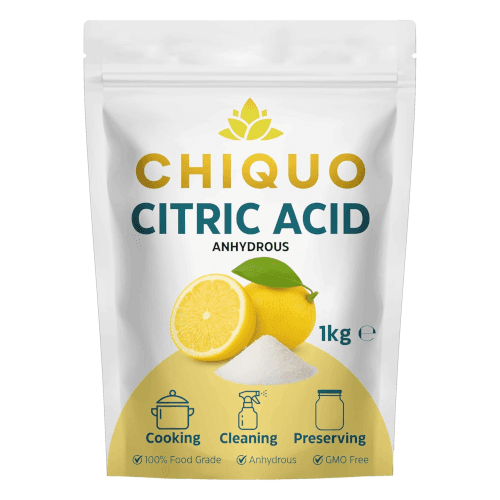
Chiquo Citric Acid
£7.99 (correct as of October 2026)
A 1kg resealable pouch of food-grade citric acid powder from Chiquo, dissolved in water to descale limescale off cartridges, kettles and taps.
We like
- Food-grade purity, so it's safe to use on anything that touches drinking water, not just a harsher cleaning-only product
- 1kg lasts through many descaling jobs rather than a single-use sachet, working out cheaper per use
- Resealable pouch keeps the powder dry and free-flowing between uses rather than clumping in an open bag
Worth checking
- Sold loose by weight rather than as pre-measured sachets, so you measure out your own dose and dissolve it yourself rather than tearing open a single packet
- Form
- Powder
- Size
- 1kg
- Grade
- Food-grade, anhydrous
- Packaging
- Resealable pouch
Specifications above listed by Amazon and may change. Check the current listing before buying. If we've got something wrong, let us know and we'll fix it.
Cost and what you're paying for
Taps built around ceramic disc cartridges typically cost a bit more upfront than basic washer taps (figures reflect what we found at our last check), generally starting from around £30 to £50 for a simple single lever mixer, since the cartridge itself is more expensive to manufacture than a rubber washer. A replacement cartridge for an existing tap usually runs from £10 to £40 depending on the brand and model, and it's worth checking the manufacturer's website for an exact match rather than assuming a universal part will fit.
A mix-up worth avoiding
- Trying to fix a ceramic disc tap's drip with a traditional washer. The two mechanisms aren't interchangeable, so check which type you actually have before ordering parts.
- Forcing a stiff lever rather than investigating the cause. Stiffness usually points to limescale build up rather than a fault that needs forcing through, and forcing it can chip the ceramic discs themselves.
- Assuming ceramic discs never wear out. They last far longer than washers on average, but limescale, grit and, eventually, genuine wear can all still cause problems over time.
- Buying a generic replacement cartridge without checking compatibility. Cartridges are usually brand and model specific, so a universal part isn't always a safe assumption.
- Ignoring water pressure imbalance as a cause of poor mixing. A ceramic disc tap that never blends temperature properly might be a pressure issue rather than a cartridge fault, covered in our guide on what flow rate you need.
Ceramic disc technology is now standard across most mid-range and premium taps sold in the UK, and any decent model should carry WRAS approval regardless of which mechanism it uses inside. If you're choosing a new tap and want to know what else to look for, our guide on how to choose a kitchen tap covers the wider decision beyond just the cartridge type, and our top 10 kitchen taps page is worth a look too if you're ready to compare specific models.