Our top pick1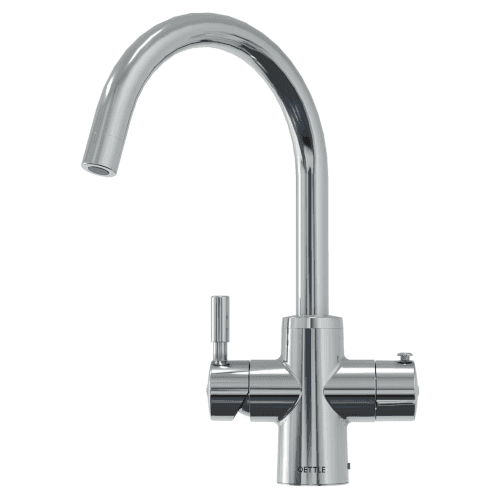
£400.00 (correct as of October 2026)
A straightforward 3-in-1 boiling water tap from Qettle, one of the more established names in this category, without the added cost of a filtered cold function you might not use. Best suited to a one or two person household rather than a family making tea all day.
We like
- Genuine 100°C boiling water rather than the 98°C some rivals manage
- Two stage safety catch, a real child safety feature rather than a gimmick
- Includes a basic limescale filter to protect the boiler tank
- Compact 2 litre tank fits most standard under-sink cabinets
Worth checking
- No filtered cold water function, mains cold only
- 2 litre tank needs around 10 minutes to recover once drained
- Function
- 3-in-1: boiling, mains hot, mains cold
- Tank size
- 2 litres
- Finish
- Chrome
- Spout height
- 228mm
- Installation
- Single hole
- Safety
- Two stage safety catch
Specifications above listed by Amazon and may change. Check the current listing before buying. If we've got something wrong, let us know and we'll fix it.
2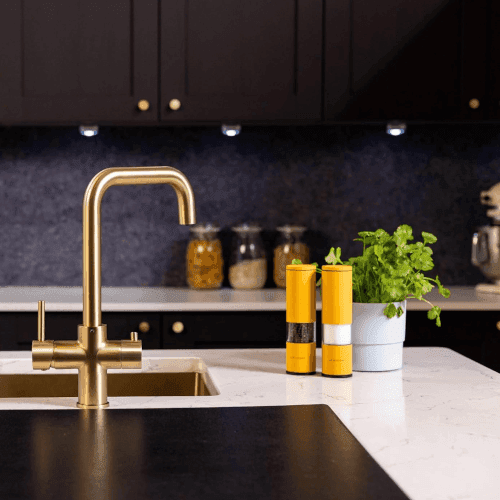
£179.99 (correct as of October 2026)
A 3-in-1 boiling water tap from Flode with a 360° swivel spout and a brushed brass finish that stands out from the usual chrome or steel options on this list. The hot and cold mixer lever handles everyday water, while a separate spring-loaded lever dispenses the boiling function.
We like
- Genuine 98°C boiling water at the touch of a spring-loaded lever
- Child-safe spring lock stops the boiling function being triggered accidentally
- Brushed brass finish is a genuine alternative to the usual chrome
- 360° swivel spout makes filling pans and bowls easier
Worth checking
- No filtered cold water function, mains cold only
- A newer name to the UK market than the more established Qettle range
- Function
- 3-in-1: boiling, mains hot, mains cold
- Finish
- Brushed brass
- Material
- Brass
- Spout design
- 360° swivel
- Installation
- Single hole
- Safety
- Child-safe spring lock
Specifications above listed by Amazon and may change. Check the current listing before buying. If we've got something wrong, let us know and we'll fix it.
3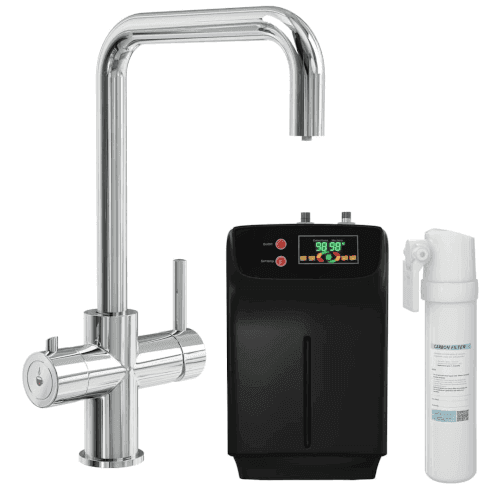
£245.83 (correct as of October 2026)
A chrome 3-in-1 boiling water tap from SÄUBER with a 2.4 litre tank, a digital display, and twin lever handles that keep the childproof boiling side clearly separate from everyday hot and cold. The angular styling and U-shaped spout give it a more modern look than some rivals on this list.
We like
- 2.4 litre tank with a digital display, enough for around 12 cups per tank
- Childproof left-hand lever keeps the boiling function separate from everyday use
- 2 year manufacturer guarantee
- Compact tank designed to fit under most standard sinks
Worth checking
- No filtered cold water function, mains cold only
- A newer name to the UK market than the more established Qettle range
- Function
- 3-in-1: boiling, mains hot, mains cold
- Tank size
- 2.4 litres
- Finish
- Chrome
- Material
- Brass
- Spout design
- U-shaped, swivel
- Installation
- Single hole
- Warranty
- 2 years
Specifications above listed by Amazon and may change. Check the current listing before buying. If we've got something wrong, let us know and we'll fix it.
4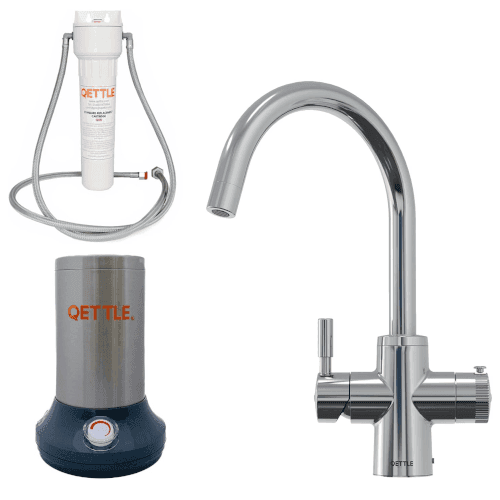
£645.00 (correct as of October 2026)
Qettle's step up from the 3-in-1, aimed at anyone who'd actually use filtered drinking water day to day rather than ticking a box. Part of the same established range, so servicing and support should be just as straightforward.
We like
- Filtered cold water in addition to true 100°C boiling
- Gooseneck spout gives more clearance under the tap
- Stainless steel body rather than plated chrome
Worth checking
- A significant jump in price over the 3-in-1 for the filtered function alone
- Needs a dedicated electrical spur, so budget for an electrician as well as a plumber
- Function
- 4-in-1: boiling, filtered cold, mains hot, mains cold
- Finish
- Chrome
- Spout height
- 228mm
- Spout design
- Gooseneck
- Installation
- Under sink
Specifications above listed by Amazon and may change. Check the current listing before buying. If we've got something wrong, let us know and we'll fix it.
5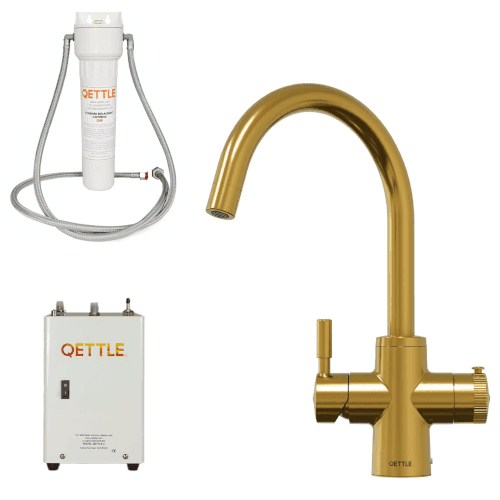
£645.00 (correct as of October 2026)
The same 4-in-1 function as Qettle's standard model, dressed up for anyone after something less clinical looking than the usual chrome or steel boiling water tap. A finish-and-looks upgrade rather than a functional one.
We like
- Distinctive gold finish, a genuine alternative to chrome or steel
- High-arc pull-down gooseneck spout for extra clearance
- Same true 100°C boiling and filtered cold as the standard 4-in-1
Worth checking
- The gold finish is the only difference from the standard 4-in-1, so buy it for the look rather than any extra function
- Gold finishes generally show water spots and fingerprints more readily than chrome
- Function
- 4-in-1: boiling, filtered cold, mains hot, mains cold
- Finish
- Gold
- Spout design
- Gooseneck, high-arc pull-down
- Installation
- Under sink
Specifications above listed by Amazon and may change. Check the current listing before buying. If we've got something wrong, let us know and we'll fix it.
What to check before buying a boiling water tap
The real difference between models is how many functions the tap actually combines. A 3-in-1 tap gives boiling, mains hot and mains cold from one spout, while a 4-in-1 tap adds filtered cold water too, useful if you already buy bottled or filtered water regularly.
Some boiling water taps only dispense boiling water, so you keep your normal kitchen tap alongside them and need a second tap hole. A 3-in-1 or 4-in-1 tap replaces your kitchen tap completely, which is simpler if you only have one hole and don't want to drill the worktop or sink.
Who a boiling water tap suits
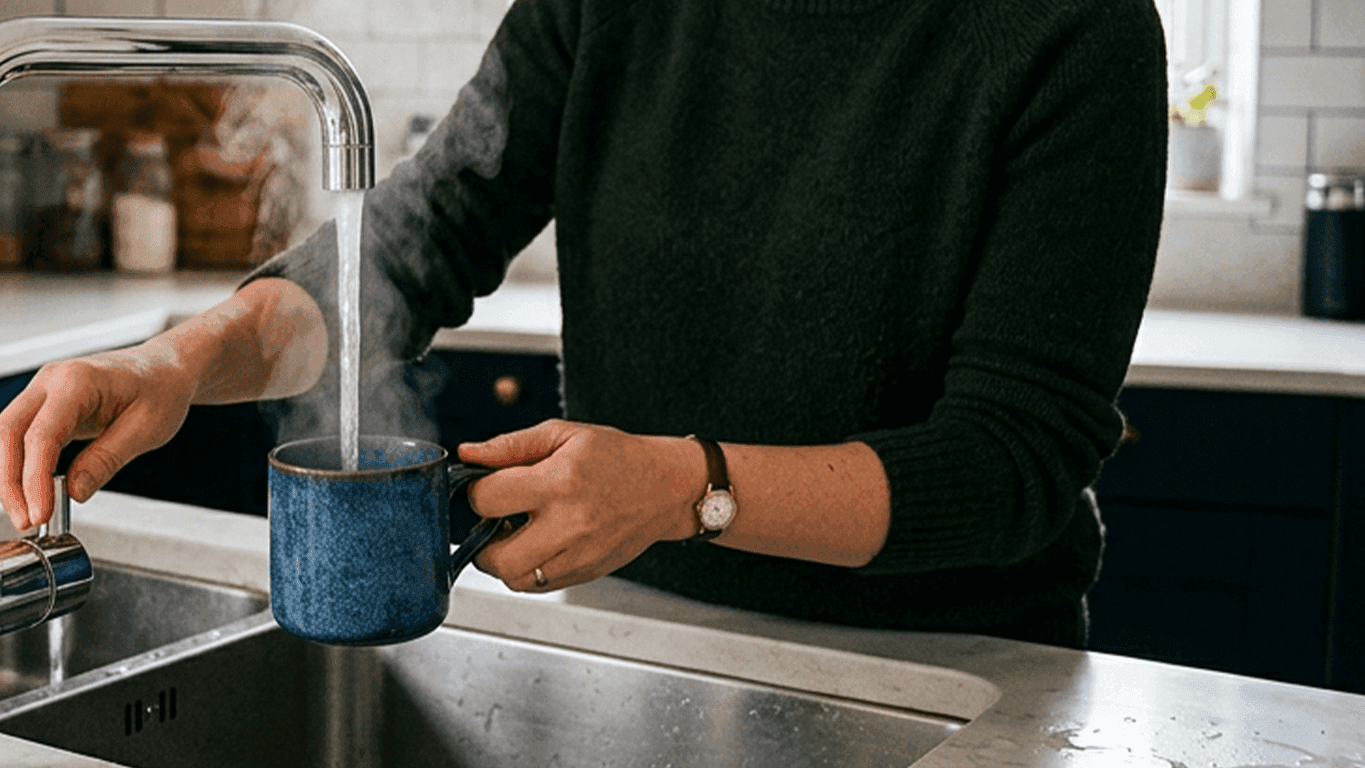
These taps make the most sense in a busy kitchen where the kettle goes on many times a day, or where worktop space is tight and losing the kettle frees up room. For a household that makes two cups of tea a day, the extra cost is much harder to justify.
If you have young children, look closely at the safety handle. Most boiling water taps need a push-and-turn or two-step action before boiling water flows, and an insulated spout that stays cool to the touch is worth checking for too.
Tank size and recovery time
Tank size determines how much boiling water is available before it needs to reheat. A smaller tank suits a household that makes tea and coffee occasionally, while a larger tank copes better with a busy kitchen making multiple hot drinks back to back. Check the manufacturer's stated recovery time, not just the tank's litre rating, since a slow-recovering large tank can be worse in practice than a fast-recovering small one.
Measure these before you order
The tank and filter both live in the cupboard under the sink, so measure the space you have, including around any waste pipes, water softener or bin. Check the tap's hole size against your sink or worktop too, and confirm there's power within reach of where the tank will sit.
Warranty and servicing
The tank and heating element are the expensive parts, so check how long the warranty covers them rather than just the tap itself, and whether you need to register the product to get the full term. It also helps to know whether the brand offers spare parts and servicing in the UK, since a boiling water tap is a much bigger investment than a standard mixer.
Running costs
A boiling water tap has two ongoing costs: the electricity to keep the tank hot, and replacement filter cartridges. Filter prices and replacement intervals vary a lot between brands, and filters need changing more often in a hard water area, so check both before you commit rather than comparing on the tap price alone. Our hard water buying guide explains why limescale matters so much for anything that heats water.
Common boiling water tap mistakes
Every unit needs a dedicated electrical spur alongside the plumbing work, so budget for an electrician as well as a plumber. Forgetting that is the most common reason an installation costs more than expected.
The other mistake is paying for a 4-in-1 tap when you'd never use the filtered water, since the filter is where most of the ongoing cost sits. Our boiling water and filtered taps guide covers running costs and whether one is worth it for your household.
A few buying guides worth reading alongside our top 5 boiling water tap picks.
 The Tap Guide

 Kitchen Taps
 Bathroom Taps
 Bath Taps
 Shower Taps
 Outdoor Taps