Our top pick1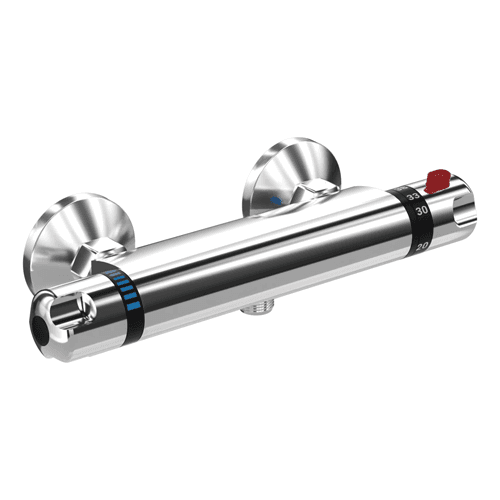
£34.99 (correct as of October 2026)
A genuinely thermostatic shower mixer bar that balances hot and cold automatically rather than needing you to fiddle with two handles. Solid brass throughout, wall mounted with a diverter for switching outlets.
We like
- Genuine thermostatic control locks at 38°C to prevent scalds and cold surprises
- Wide 20 to 50°C outlet temperature range
- Ceramic disc valve for smooth, drip-free operation
- Strong 18.6 L/min flow rate
Worth checking
- No stated minimum pressure in the listing
- Temperature range
- 20-50°C (locks at 38°C)
- Flow rate
- 18.6 L/min
- Connections
- G1/2" inlet and outlet
- Inlet spacing
- 150mm
- Valve
- Ceramic disc, diverter
- Material
- Brass
- Finish
- Polished chrome
- Mounting
- Wall mount, exposed
Specifications above listed by Amazon and may change. Check the current listing before buying. If we've got something wrong, let us know and we'll fix it.
2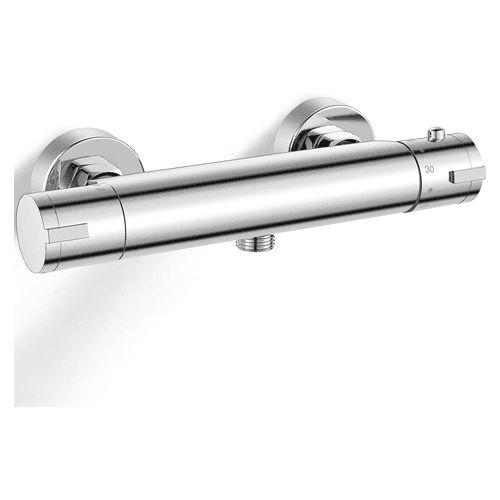
£34.99 (correct as of October 2026)
A single-lever exposed shower valve, a simpler single-outlet alternative to the dual-handle bars elsewhere on this list. Worth considering if you just want on/off and temperature control without extra outlets you won't use.
We like
- Single-lever thermostatic control, simpler to use than dual-handle bars
- 38°C safety lock as standard, with a push-button override for hotter showers
- Automatically balances hot and cold water pressure to hold a stable temperature
- Solid brass construction with a chrome finish that resists tarnish and corrosion
- Fits any standard G1/2 shower hose
Worth checking
- Single outlet only, no built-in diverter for a second shower head
- No stated flow rate or minimum pressure in the listing
- Temperature range
- Locks at 38°C (override available)
- Inlet spacing
- 150mm
- Outlet
- G1/2" (DN15), shower hose
- Handles
- 1 (thermostatic lever)
- Valve
- Thermostatic, anti-scald
- Material
- Brass
- Finish
- Chrome
- Weight
- 1.34kg
- Mounting
- Wall mount, exposed
Specifications above listed by Amazon and may change. Check the current listing before buying. If we've got something wrong, let us know and we'll fix it.
3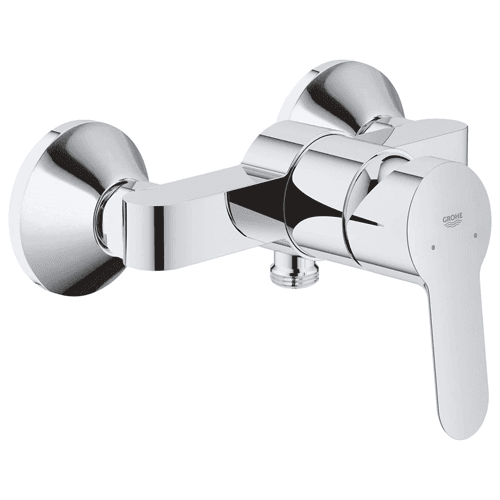
£60.29 (correct as of October 2026)
A single-lever shower valve from Grohe, one of the most established names in bathroom fittings, and a well-regarded choice if a full thermostatic bar isn't a priority for you. Backed by the kind of long-term parts support and finish quality Grohe is known for.
We like
- Adjustable hot limit stop acts as a built-in scald guard
- Grohe LongLife cartridge technology for smooth, accurate control
- Long-Life chrome finish resists tarnishing, wipes clean with a microfibre cloth
- Strong 43.9 L/min flow rate
- 5-year manufacturer warranty from an established name in bathroom fittings
Worth checking
- Not thermostatic, so it won't self-correct for pressure changes elsewhere in the house like the other picks on this list
- Noticeably pricier than the budget picks on this list
- Flow rate
- 43.9 L/min
- Valve
- Cartridge (Grohe LongLife)
- Special feature
- Adjustable hot limit (scald guard)
- Handles
- 1 (lever, centre)
- Outlet
- G1/2" with integrated non-return valve
- Material
- Brass
- Finish
- Chrome (Grohe Long-Life Finish)
- Warranty
- 5 years
- Mounting
- Wall mount, exposed
Specifications above listed by Amazon and may change. Check the current listing before buying. If we've got something wrong, let us know and we'll fix it.
4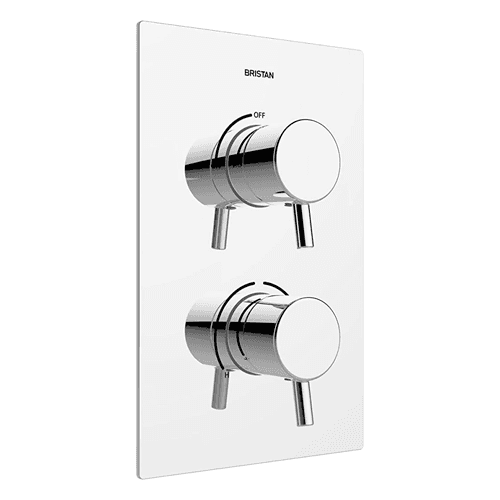
£265.56 (correct as of October 2026)
A recessed thermostatic valve from Bristan, one of the most established names in UK bathroom fittings, and the priciest pick on this list by some margin. The trade-off is a genuinely tidy, wall-flush finish that the exposed bars elsewhere can't match.
We like
- Temperature stop button helps prevent scalds for children or vulnerable family members
- Works across low-pressure gravity fed systems through to high-pressure combi boilers
- Fits into a standard UK wall cavity needing just 35mm of depth
- Salt spray tested chrome finish for lasting durability
- 5-year manufacturer warranty from an established UK brand
- Supplied with a full fitting kit including faceplate, wall outlet, and fixings
Worth checking
- Noticeably pricier than most other picks on this list
- Recessed fitting is a bigger job than the exposed bars on this list, best left to a confident DIYer or plumber
- Valve
- Thermostatic, dual control
- Maximum pressure
- 5 bar
- Connections
- 15mm compression, inlet and outlet
- Wall cavity depth
- 35mm
- Material
- Brass
- Finish
- Chrome (salt spray tested)
- Weight
- 2.77kg
- Warranty
- 5 years
- Mounting
- Recessed/concealed, wall mounted
Specifications above listed by Amazon and may change. Check the current listing before buying. If we've got something wrong, let us know and we'll fix it.
5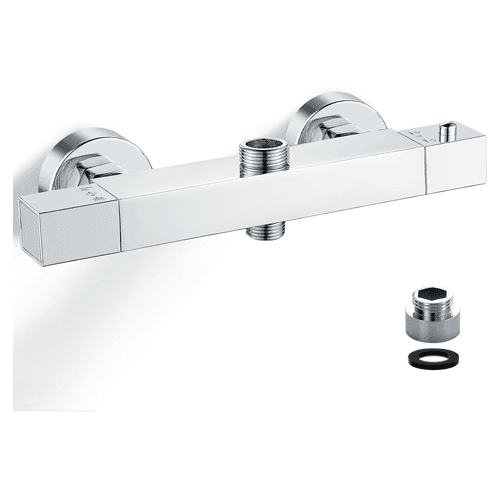
£38.99 (correct as of October 2026)
A square-profile thermostatic shower bar, a sharper look than the usual round bars on this list. The left handle switches between a handheld shower and a fixed rain shower head, so you get two outlets from one valve.
We like
- Square profile is a sharper, more modern look than the usual round bar
- 38°C safety lock as standard, with a push-button override for hotter showers
- Automatically balances hot and cold water pressure to hold a stable temperature
- Brass and chrome construction resists corrosion and tarnishing
- Pipe adaptor included for hoses with a G1/2 fitting
Worth checking
- No stated flow rate or minimum pressure in the listing
- Two-handle design rather than a single lever for adjustment
- Temperature range
- Locks at 38°C (override available)
- Inlet spacing
- 150mm
- Connections
- 1/2" BSP (bottom, hose), 3/4" BSP (top, shower pipe)
- Handles
- 2 (temperature and diverter)
- Valve
- Thermostatic
- Material
- Brass
- Finish
- Chrome
- Weight
- 1.29kg
- Mounting
- Wall mount, exposed
Specifications above listed by Amazon and may change. Check the current listing before buying. If we've got something wrong, let us know and we'll fix it.
6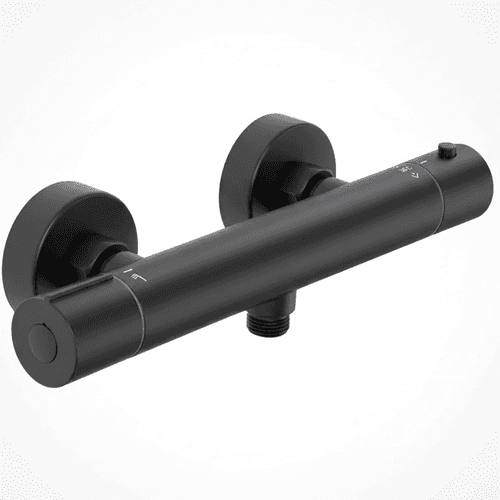
£49.99 (correct as of October 2026)
A matte black thermostatic valve built with UK hard water in mind, worth a look if limescale has been a recurring problem with previous showers. Fits straight into existing UK standard G1/2 holes for a retrofit-friendly install.
We like
- Matte black finish is a striking change from the chrome bars elsewhere on this list
- Anti-limescale cartridge designed for the UK's harder water areas
- Insulated inner tank keeps the exterior cool to the touch, reducing scald risk
- 38°C thermostatic lock with a one-touch safety override
Worth checking
- No stated flow rate or minimum pressure in the listing
- Two-handle design rather than a single lever for adjustment
- Temperature range
- Locks at 38°C (override available)
- Connections
- G1/2" inlet and outlet
- Handles
- 2 (wall mounted)
- Valve
- Thermostatic, anti-limescale cartridge
- Material
- Zinc body, ABS handles
- Finish
- Matte black (electrophoretic)
- Weight
- 1.16kg
- Warranty
- 3 years (spare parts for 10 years)
- Mounting
- Wall mount, exposed
Specifications above listed by Amazon and may change. Check the current listing before buying. If we've got something wrong, let us know and we'll fix it.
7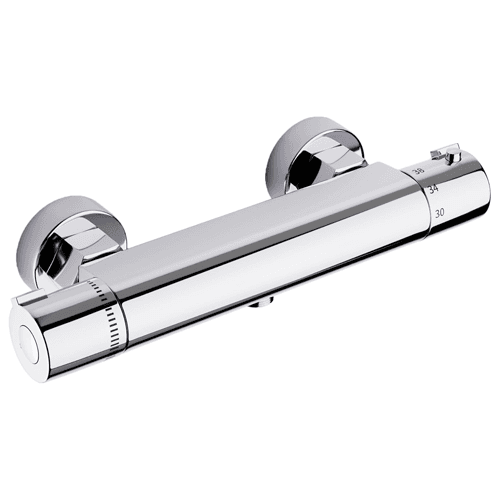
£42.99 (correct as of October 2026)
A solid brass thermostatic mixer that Morado markets on speed, reaching your set temperature quickly rather than making you wait around while it settles. Thermostatic control at a reasonable price, backed by a 3-year warranty.
We like
- Reaches your set temperature within seconds and holds it steady throughout the shower
- Anti-scald valve locks at 38°C for safety
- Eco-friendly flow control designed to cut water consumption by up to 40%
- Solid brass construction with a scratch and tarnish-resistant Starlight finish
Worth checking
- No stated flow rate or minimum pressure in the listing
- Two-handle design rather than a single lever for adjustment
- Temperature range
- Locks at 38°C
- Connections
- G1/2" inlet and outlet
- Handles
- 2 (knob, centre)
- Valve
- Thermostatic, anti-scald
- Material
- Brass
- Finish
- Polished chrome (Starlight)
- Spout design
- Traditional curve
- Warranty
- 3 years
- Mounting
- Wall mount, exposed
Specifications above listed by Amazon and may change. Check the current listing before buying. If we've got something wrong, let us know and we'll fix it.
8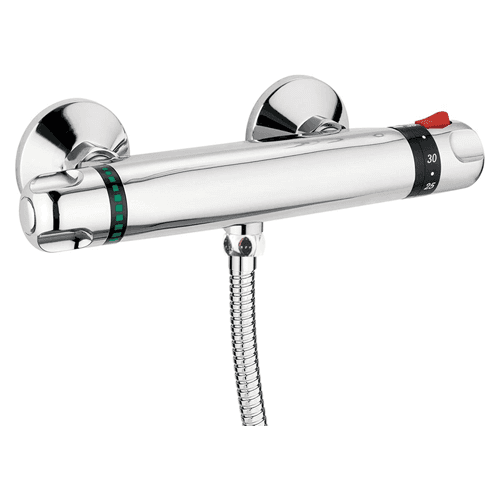
£54.99 (correct as of October 2026)
An exposed thermostatic bar from Enki, one of the few on this list rated to perform on as little as 0.5 bar. A sensible pick if you're on a weaker gravity fed system where other thermostatic valves refuse to fire properly.
We like
- Rated to work on as little as 0.5 bar, worth considering for a weaker gravity fed system
- Pre-sets to 38°C with an anti-scald override for safety
- Automatically shuts off if the cold water supply fails
- Adjustable 135-170mm connector spacing fits slightly different existing pipework
- Solid brass construction with a polished chrome finish
Worth checking
- 1-year guarantee is shorter than several rivals on this list
- No stated flow rate in the listing
- Minimum pressure
- 0.5 bar (1.0 bar recommended)
- Temperature
- Pre-set at 38°C with override
- Connector spacing
- 135-170mm adjustable (150mm inlet centres)
- Outlet
- 1/2" bottom outlet
- Material
- Brass
- Finish
- Polished chrome
- Weight
- 1.53kg
- Warranty
- 1 year
- Mounting
- Wall mount, exposed
Specifications above listed by Amazon and may change. Check the current listing before buying. If we've got something wrong, let us know and we'll fix it.
9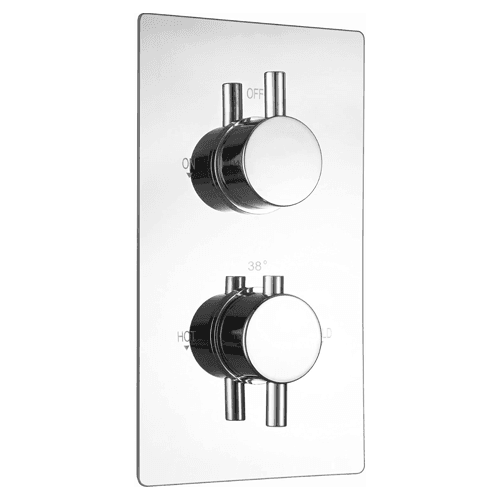
£134.99 (correct as of October 2026)
A concealed thermostatic shower valve from Enki, worth the bigger installation job if you want a cleaner look than the exposed bars elsewhere on this list. Rated to work from 0.5 bar, though Enki recommends 1.0 bar for the best performance.
We like
- Concealed design hides all pipework behind the wall for a cleaner look
- Anti-scald protection automatically cuts water flow if the cold supply fails
- Designed to be serviced without needing to re-plumb the wall behind it
- Solid brass construction throughout with a durable chrome finish
- Backed by an unusually long 10-year guarantee
Worth checking
- Concealed fitting needs pipework routed into the wall, a bigger job than the exposed bars on this list
- Handle fixing screws are on the light side, worth checking they are seated firmly during installation
- Inlet threads are 3/4" BSPP rather than standard UK metric fittings, worth checking compatibility before buying
- Valve
- Thermostatic (twin valve, single outlet)
- Controls
- Separate on/off and temperature dials
- Minimum pressure
- 0.5 bar (1.0 bar recommended)
- Inlet threads
- 3/4" BSPP (hot/cold)
- Outlet thread
- 1/2" BSPP
- Material
- Brass
- Finish
- Chrome
- Weight
- 2.2kg
- Warranty
- 10 years
- Mounting
- Concealed, wall mounted
Specifications above listed by Amazon and may change. Check the current listing before buying. If we've got something wrong, let us know and we'll fix it.
10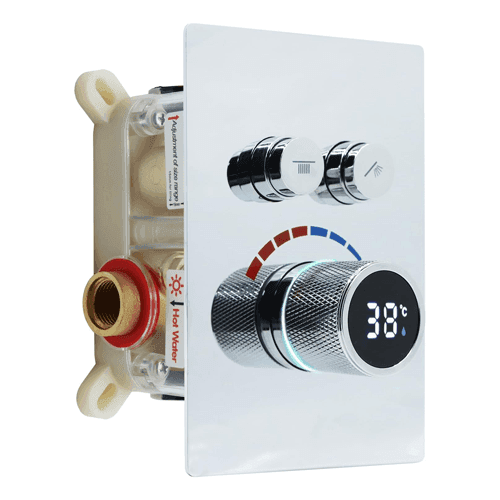
£143.98 (correct as of October 2026)
A concealed shower valve with a genuinely useful party trick, an LED display showing your water temperature in real time, powered by the flow itself rather than a battery. Genuinely distinctive if you're tired of guessing the temperature by hand.
We like
- LED display shows real-time water temperature, powered by water flow rather than batteries
- Two outlets can run simultaneously or independently via separate push buttons
- Removes the need to test water temperature by hand, a genuine help for children or elderly relatives
- Embedded box design avoids opening up the wall for maintenance
- Solid brass construction throughout
Worth checking
- A newer listing than most on this list, worth weighing the premium price against a less established track record
- No stated minimum water pressure in the listing
- Valve
- Diverter (push button, 2-way)
- Display
- Water-powered LED, real-time temperature
- Outlets
- 2 (simultaneous or independent)
- Connection
- UK standard 1/2"
- Material
- Brass
- Finish
- Chrome
- Item dimensions
- 24 x 9 x 7cm
- Mounting
- Concealed, wall mounted
Specifications above listed by Amazon and may change. Check the current listing before buying. If we've got something wrong, let us know and we'll fix it.
What to check before buying a shower valve
Thermostatic control is the one feature worth prioritising over finish or looks, since it holds your set temperature steady even if someone flushes a toilet or runs a tap elsewhere in the house. Look for a TMV2 rating as standard, or TMV3 for a household with young children or elderly relatives.
Match the valve to your water system
On a combi boiler or unvented cylinder, hot and cold both arrive at mains pressure, and almost any mixer valve on this list will work well. On a gravity fed system the pressure can be much lower, so check each valve's minimum working pressure and consider a pump if yours falls short.
Mixer valves are also a different thing from electric showers. An electric shower heats cold mains water itself, so if that's what you have now, switching to a mixer valve means running a hot supply to the shower as well.
Thermostatic or manual
Manual single lever valves, like the Grohe BauEdge on this list, are mechanically simpler, and they work well on a combi boiler where pressure stays fairly steady. What they can't do is correct the temperature when pressure changes elsewhere in the house, so the water can run suddenly hot or cold. For a family bathroom, a thermostatic valve is the safer choice and costs very little more at the budget end.
Bar valve or concealed valve
Exposed bar valves sit on the wall with the pipework showing, so they're quicker and cheaper to fit or replace, and they suit a straight swap for an old valve. Concealed valves hide the body and pipework behind the wall for a cleaner look, but they need more work at the first fix stage and are harder to reach for servicing later.
Measure these before you order
For a bar valve, measure the distance between the hot and cold inlet centres on the wall. UK bar valves are usually built for 150mm centres, with adjustable unions that allow a little leeway. Also count your outlets, since a valve feeding both a fixed head and a handset needs a built-in diverter.
How much to spend on a shower valve
Budget thermostatic valves start around £60 to £120 and handle everyday use reliably (figures from our last check). Mid-range valves from £120 to £250 typically add a wider temperature range and a smoother, longer-lasting cartridge, and premium digital shower systems above £250 add app or panel control and multiple outlets, most useful in a larger or more heavily used bathroom. Our full guide to choosing a shower tap covers exposed and concealed valves in more detail.
Common shower valve mistakes
Buying a valve without checking your water system is the big one, and it's the reason a new shower sometimes runs weaker than the old one. Check the minimum pressure on the listing against your own supply first.
The other is choosing on looks without thinking about servicing. Every thermostatic cartridge needs cleaning or replacing eventually, especially in a hard water area, so make sure a concealed valve has an access panel or a removable faceplate. Our guide to cleaning limescale from taps and shower heads covers the routine that keeps a valve and head working smoothly between services. Brands with good spare parts support make that job much easier, and our guide to the best tap brands covers which ones have the strongest reputation for showers.
A few buying guides worth reading alongside our top 10 shower tap picks.
 The Tap Guide

 Kitchen Taps
 Bathroom Taps
 Bath Taps
 Outdoor Taps
 Boiling Water Taps