The Tap Guide
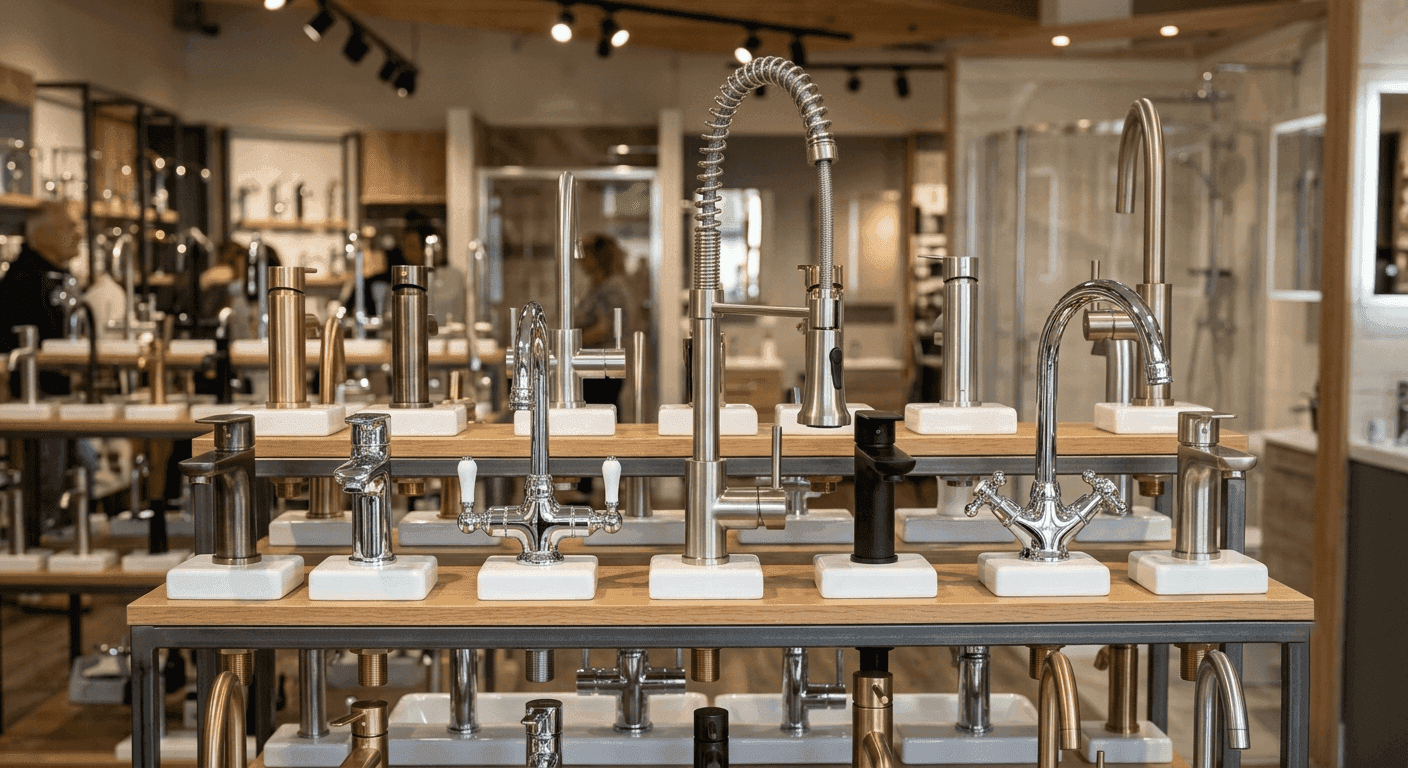
A kitchen tap gets more daily use than almost anything else in the house, so it's worth spending a bit of time getting the choice right rather than grabbing the first one that looks nice online. Here's what actually makes a difference once it's fitted and you're using it every day.
It's also one of the easier things to get wrong, since a tap that looks right in a showroom photo can turn out to be the wrong height, the wrong reach, or simply too fiddly to use one handed once it's fitted over your own sink. We'll go through sink compatibility, mixer type, spout height, finish and budget in turn, so you know what actually matters for how you use your kitchen.
Start with your sink
Before you look at a single tap, check how many holes your sink or worktop already has. Most modern kitchens are set up for a monobloc tap, a single lever mixer that needs just one hole, but older kitchens sometimes have two or three holes for separate hot, cold, and spray taps.
If you're replacing like for like, this is simple. Switching from a two hole setup to a single hole monobloc needs a bit more planning, usually a matching blanking plate to cover the spare hole.
Also measure the worktop thickness and check the tap's fitting kit is compatible. Most standard mixer taps work with worktops up to around 40 to 45mm, but thicker stone or butcher block worktops sometimes need an extended fitting kit, which isn't always included as standard.
Matching a tap to a Belfast or butler sink
A Belfast or butler sink sits deeper and often further forward than a standard inset bowl, which changes what you need from a tap more than most people expect. The spout height that works fine over a shallow inset bowl can leave you constantly banging pans against the base of a deep Belfast sink, so look for a tap with a taller spout and, ideally, a higher gooseneck curve to give proper clearance.
Reach matters too, since a Belfast sink is often set slightly proud of the worktop or on its own upstand, which can put the tap hole further from the bowl's centre than a standard sink. Measure from the tap hole to the centre and back edge of the bowl before choosing a spout reach, rather than assuming a tap that suits a normal inset sink will reach comfortably over a Belfast one.
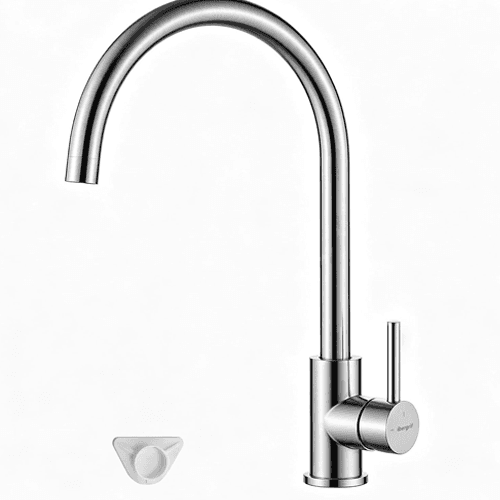
Our top pick right now
Mixer or monobloc, single lever or two handles
Almost every kitchen tap sold today is a mixer, meaning hot and cold water blend inside the tap rather than coming out of two separate spouts. Within that, a monobloc single lever tap is now the most common style: one smooth motion up for flow, side to side for temperature. It's quick to use one handed, which matters more than you'd think when you've got a pan in the other hand.
Two handled mixers still exist and suit period style kitchens well, but they're slower to adjust and a little less practical for everyday cooking. If you like the traditional look, they're a fine choice, just know you're trading a bit of convenience for the aesthetic.
A monobloc's other genuine advantage is fewer separate joints and fittings than a three hole set-up, which generally means fewer places a leak can develop over the tap's lifetime. You'll also sometimes see a tap described as "monobloc" that still has two separate handles either side of the spout rather than one lever: it fits through the same single hole, just controlling hot and cold with two handles instead of one, giving a slightly more traditional look without needing the extra holes a true three hole tap needs.
Spout height and reach
This is the detail people miss most often. If you regularly fill a stockpot, a big vase, or a watering can under the tap, check the clearance between the spout and the sink base, not just the tap's overall height. A tall spout with a short reach can still leave you struggling to fill anything wide, while a low spout will splash if it's too close to the sink bed.
For a standard single bowl sink, a medium height spout with a reach that covers most of the bowl works for almost everyone. Double bowl sinks need a tap with a 360 degree swivel instead, so you can direct water to either side without repositioning anything.
Finish: chrome, brushed steel, matt black, or brass
Chrome remains the most practical choice. It's cheap to produce, resists most scratches, and is easy to clean, though it does show water spots and fingerprints more visibly than other finishes.
Brushed steel or brushed nickel hides marks better day to day and has a slightly warmer, softer look. Matt black and brass finishes have become popular for a more distinctive kitchen, but they're usually a premium option and some cheaper matt black coatings can wear at contact points over time, so it's worth checking reviews on durability before committing to a specific product. Our guide on the best tap finishes goes through the pros and cons of each in more detail.
Pull-out and pull-down sprays
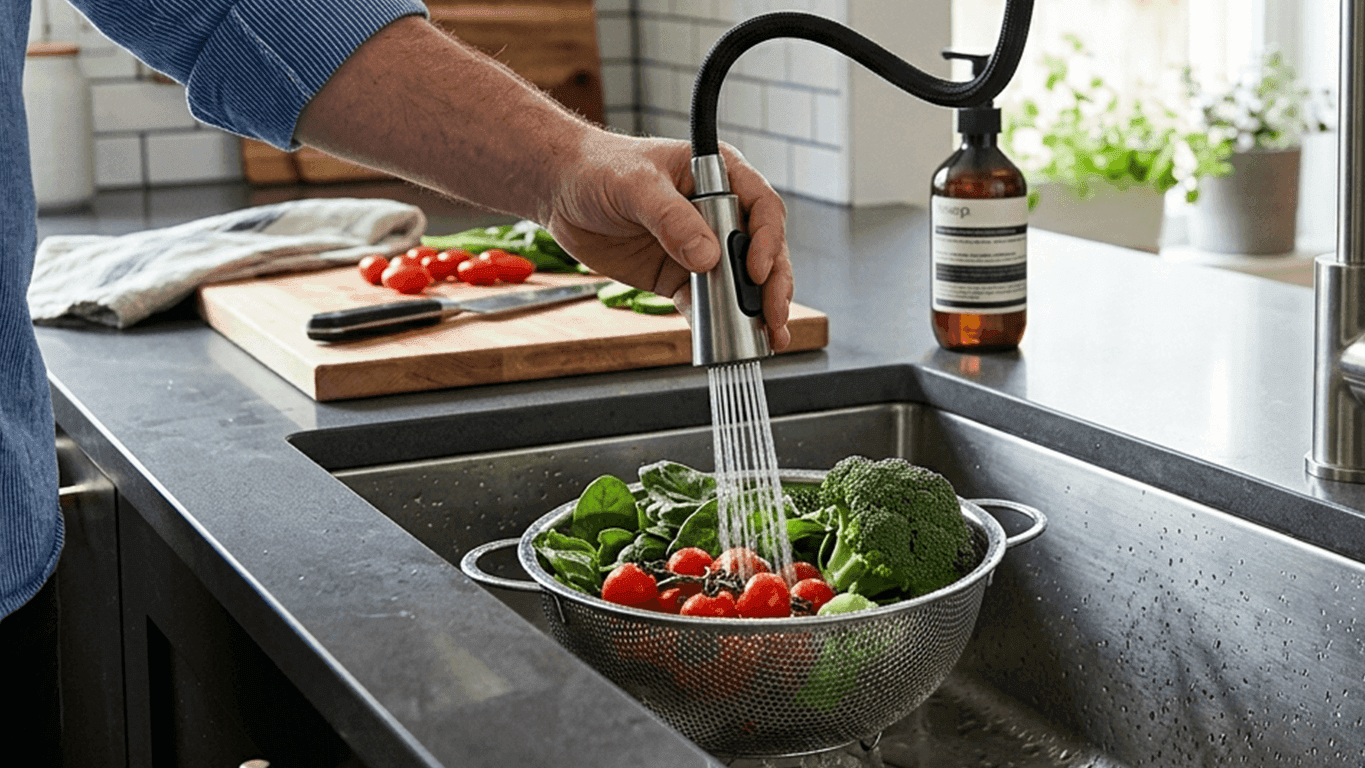
If you do a lot of washing up by hand or regularly rinse large trays and dishes, a pull-out or pull-down spray head is a genuine upgrade rather than a gimmick. It lets you direct water exactly where you need it instead of moving the dish around under a fixed spout.
The trade-off is a slightly more complex mechanism with a hose inside the tap body, which is one more thing that could eventually need attention, though on decent quality taps this is rarely an issue for years. See our guide on pull-out versus pull-down taps if you're deciding between the two.
A separate spray tap or soap dispenser
Older three or four hole kitchen sinks sometimes had a small, separate spray tap on a short flexible hose sitting beside the main mixer, distinct from a pull-out spray built into the mixer's own spout.
If your sink still has the spare hole for one, a separate spray tap is a straightforward like-for-like replacement, and it means the everyday mixer never needs the added complexity of an internal hose. It's a less common setup on newer kitchens, where an integrated pull-out spray usually does the same job through a single hole instead.
A built-in soap dispenser is the other common use for a spare hole, filled from underneath rather than plumbed in. It's worth checking the bottle capacity and whether refilling means pulling the whole pump out or just unscrewing a cap, since some designs are far fiddlier to top up than others once fitted.
Boiling water and filtered taps
Instant boiling water taps and integrated filter taps are worth considering if you make a lot of tea, cook a lot of pasta, or simply want fewer things cluttering the worktop. They cost considerably more than a standard mixer and usually need a dedicated under-sink unit installed alongside the tap itself, so factor in both the tap cost and the installation.
For most kitchens, a standard mixer with a separate kettle remains the simpler, cheaper option, but if space and budget allow, an integrated tap saves a genuine amount of daily faff.
Budget and what you're really paying for
At the lower end, you're mostly paying for basic function: a tap that mixes hot and cold reliably and doesn't leak. As price increases, you're generally paying for smoother cartridge mechanisms, better finish durability, extra features like pull-out sprays, and often a longer or more comprehensive warranty.
A mid-range tap from an established brand tends to be the sweet spot for most kitchens, giving you a noticeably smoother action and better long term finish without paying for features you might not use. Any tap sold for use in the UK should also meet WRAS approval standards, which cover water safety and backflow prevention, and you can check a specific model against the WRAS approved fittings directory before buying.
Once you know what you're after, take a look at our top 10 kitchen taps for a shortlist of picks across different budgets.