The Tap Guide
A tap that won't turn on, giving no flow at all, is more alarming than a drip or a tap that won't shut off, but it's often the easiest of the three to trace back to a cause.
Before assuming the tap itself has failed, work through where in the system the water is actually stopping, starting with the quickest checks and working back toward less common causes. We'll cover isolation valves, airlocks, frozen pipes, mains supply problems and faults inside the tap itself, so you know what to rule out first.
First, work out how much of the house is affected
Check a tap in another room. If everything else runs normally and only one tap has stopped, the problem is local to that fitting or its isolation valve.
A house-wide loss of water points further back instead, either to the stopcock, the mains supply itself, or a burst or frozen pipe feeding the whole property.
This one check narrows things down faster than anything else, so it's worth doing before opening up the tap or reaching for a spanner.
An isolation valve that's closed or only part open
The most common cause of a single dead tap is an isolation valve that's been left closed, often after previous work under the sink, or one that's only turned partway.
Find the valve for that tap, usually a small slotted or lever valve on the pipe just below the sink or basin, and check it's turned fully in line with the pipe rather than across it.
If you've recently fitted the tap yourself, this is the first thing to check. Our guide on installing a tap covers reopening the valves as the final step, and it's an easy one to forget in the middle of the job.
An airlock in the pipework
An airlock happens when a pocket of trapped air blocks the flow of water through a pipe, and it's a common after-effect of any work on the plumbing, a burst that's since been fixed, or a period with the water off.
A tap affected by an airlock often splutters or runs weakly rather than producing nothing at all, though a large airlock can stop flow completely.
The traditional fix is to connect a hose between the affected tap and a working one on the same supply, mains fed cold to mains fed cold, and briefly run the working tap with the affected one open, using mains pressure to push the air pocket through.
If you're not confident doing this yourself, it's a quick job for a plumber and not one worth forcing with excessive pressure.
Frozen pipes
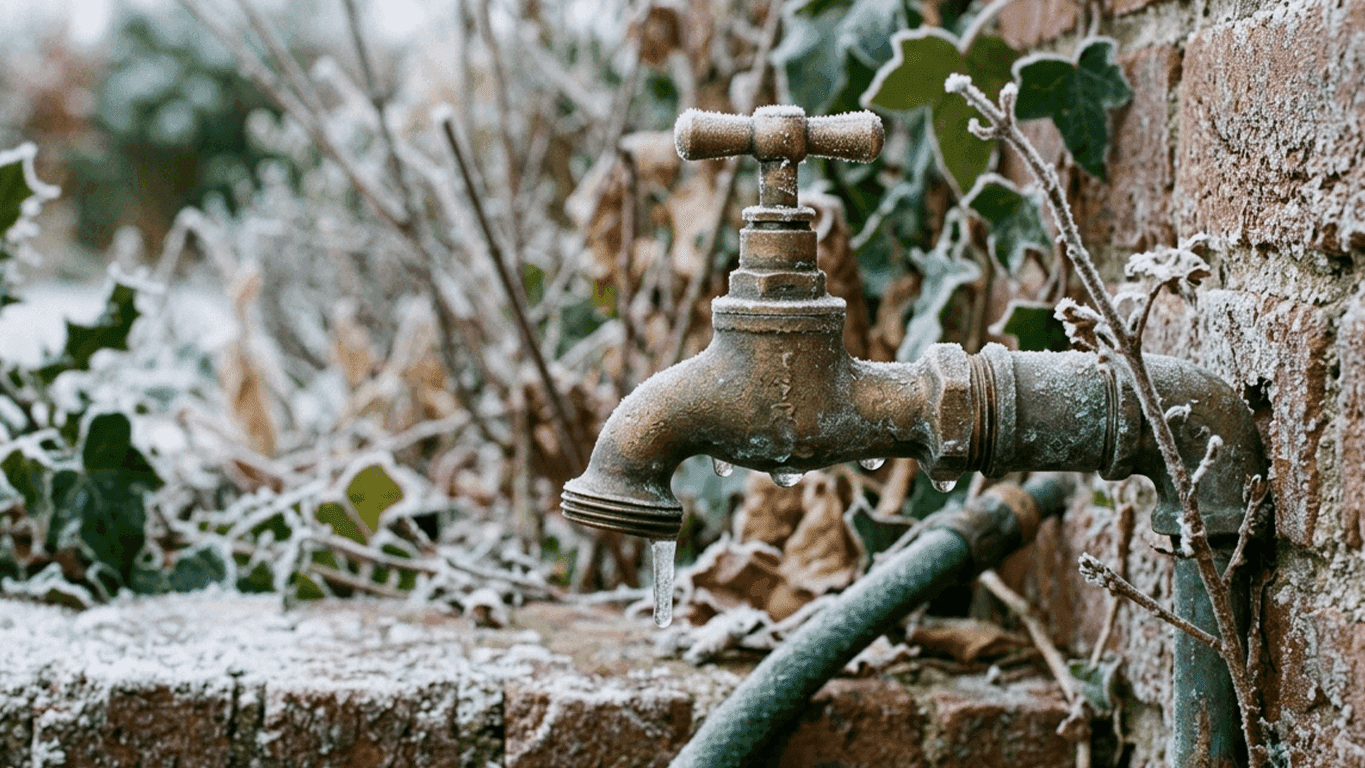
In cold weather, a dead tap with everything else still working often points to a frozen section of pipe feeding just that fitting, particularly common on outdoor taps and pipework running through an unheated loft or exterior wall.
Our guide on protecting outdoor taps from freezing covers thawing a frozen pipe safely, and the same principles apply to an indoor pipe run through a cold space.
Never use a naked flame to thaw a pipe. A hot water bottle, a hairdryer on a low setting, or gently wrapped warm towels are the safe options, applied gradually from the tap end back toward the blockage.
Safety note
If a frozen pipe has already split, you might not notice until it thaws and starts leaking or spraying. If you suspect a freeze, isolate that section of pipe before you start warming it up, so a hidden split doesn't cause a flood the moment the ice clears.
Mains supply and stopcock problems
If every tap in the house has stopped, check the main stopcock, usually under the kitchen sink or near where the supply enters the property, hasn't been knocked or turned off.
From there, check whether neighbours on the same street are also affected, which points to a mains supply issue rather than anything inside your own property. Water companies publish live supply interruption information, and it's worth checking before assuming a fault on your own pipework.
When it actually is the tap
Occasionally the cause is inside the tap itself: a badly clogged aerator, a jammed cartridge that's stopped the internal mechanism opening at all, or debris from recent plumbing work lodged in the valve. Unscrewing and cleaning the aerator is worth trying first, since it's the quickest thing to rule out.
Beyond that, the same washer and ceramic disc diagnosis covered in our guide on what to do when a tap won't turn off applies here too, just with the opposite symptom.
Mistakes worth avoiding
- Assuming the tap has failed before checking another tap in the house. This single check tells you whether the problem is local or affects the whole supply, and changes everything about where to look next.
- Forcing a valve that won't turn. A seized isolation valve can shear if forced. If it won't move with reasonable effort, it's worth calling a plumber rather than risking a break that turns a no-water problem into a leak.
- Using a naked flame to thaw a frozen pipe. This is a genuine fire and pipe-damage risk. Stick to gentle, gradual warming from the tap end.
- Not checking for a wider mains supply issue first. A quick check of your water company's live status page can save an afternoon spent investigating your own pipework unnecessarily.
- Ignoring a sudden leak once a frozen pipe thaws. A split caused by freezing often only shows itself once the ice clears, so isolate the section first if you suspect a freeze.
If you've worked through these and a tap still has no water, it's time to call a plumber rather than keep investigating, particularly if you can't safely locate or operate your isolation valves or stopcock. Our guide on what a plumber typically charges covers what to expect from a call-out.