The Tap Guide

Most people only go looking for their stopcock when water is already coming through the ceiling, which is the worst possible moment to find out it's buried behind the cleaning products or seized solid after twenty years without use. Every home on a mains supply has one, and closing it cuts the cold water feed to the whole property, so it's the first thing to reach for with a burst pipe, a leak you can't trace, or a plumbing job on a fitting with no shut-off valve of its own.
This guide covers where stopcocks are usually hidden in UK houses and flats, how to turn one off properly, what to do when it's stiff or won't shut fully, and how to turn the water back on without creating a fresh problem. Finding and testing yours takes about ten minutes, and autumn, before the first hard frost, is the best time to do it.
What a stopcock does
A stopcock, sometimes called a stop tap or stop valve, is the main valve on the cold water supply pipe where it enters your home. Closing it stops mains water flowing into the property, which takes the pressure off every pipe beyond it.
It's different from an isolation valve, the small slotted or lever valve under a sink or toilet that shuts off a single fitting. For a one-tap repair, the isolation valve is the better choice because the rest of the house keeps its water. The stopcock is for whole-house jobs, emergencies, and fittings with no isolation valve, including a tap that won't turn off and has nothing else to stop it.
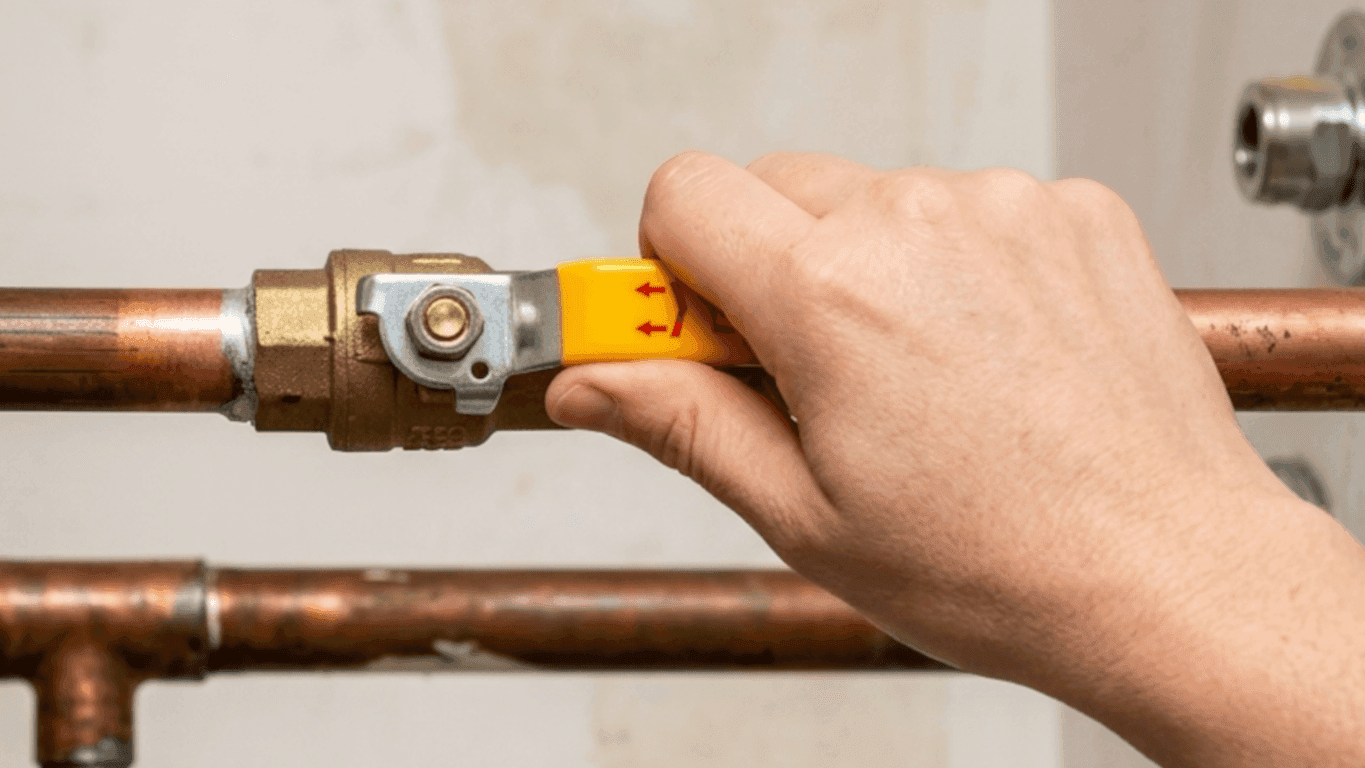
Most older homes have a traditional screw-down stopcock, a brass valve with a crosshead or T-shaped handle that takes several turns to close. Newer homes and recent plumbing work often use a lever-operated quarter-turn valve instead, which shuts in a single movement.
Where to find your stopcock
The internal stopcock sits wherever the supply pipe comes up into the house, and that's usually on the side of the property facing the street. Check these places, roughly in order of how common they are:
- Under the kitchen sink. By far the most common spot, usually at the back of the cupboard on a pipe rising through the floor.
- Under the stairs or in a hallway cupboard. Common in terraced houses where the supply comes in at the front.
- In a downstairs toilet, utility room or garage. Particularly in newer builds and extended properties.
- Under the floorboards near the front door. Older homes sometimes hide it under a small hatch or a loose board in the hall.
- In a cellar or basement. Look close to where the pipe enters through the front wall.
If you live in a flat, the stopcock is usually inside your own front door, in the kitchen, the bathroom or an airing cupboard. In some older conversions and blocks it's in a communal cupboard or riser, and occasionally one valve controls more than one flat, so ask your landlord, managing agent or building manager if you can't track it down.
There's also an outside stopcock, usually under a small metal or plastic cover in the pavement or just inside your front boundary. In most cases this belongs to your water company and needs a long stopcock key to reach. It's a useful backup when the inside valve fails, but it isn't something to rely on in a hurry, and on some streets the same valve also serves a neighbour.
Tip
Once you've found it, clear the space in front of it, tie a bright label on the pipe, and show everyone in the house where it is. The person who discovers a leak at 2am won't necessarily be you.
How to turn it off
Turn the handle clockwise to close it. On a traditional stopcock that means several full turns until it stops, and on a lever valve it means turning the lever until it sits across the pipe rather than in line with it. Stop as soon as you feel firm resistance, since forcing a valve past its end point can damage the washer inside.
Then open the cold tap in the kitchen to check. Water left in the pipes will run for a few seconds before the flow fades to nothing. If it keeps running steadily, the stopcock hasn't sealed, which is covered further down.
What happens elsewhere in the house depends on your water system:
- Combi boiler or unvented cylinder. Closing the stopcock stops hot and cold water everywhere, since everything is fed straight from the mains.
- Cold water tank in the loft. The kitchen cold tap stops, but taps and toilets fed from the tank keep running until it empties. To stop those, close the valve on the pipe leading out of the tank, or run the bath taps to drain it down.
Our guide to tap flow rate explains how to tell which kind of system you have.
With a burst pipe
Turn the stopcock off first, then switch off your boiler or immersion heater and open the cold taps to drain the pipes. If water has reached light fittings or sockets, switch the electricity off at the consumer unit only if you can reach it without touching anything wet. Otherwise, keep clear and call an electrician.
What to do if it's stiff or won't turn
Stopcocks that haven't moved in years often seize, because limescale and corrosion build up around the spindle where it passes through the gland nut, the small nut just below the handle. The temptation is to grab a pair of grips and lean on it, and that's exactly how spindles snap and old joints crack, turning a stiff valve into a flood you can't stop.
Work through it gently instead:
- Spray penetrating oil around the spindle where it enters the gland nut, then leave it for around 15 minutes to soak in.
- Wrap a cloth around the handle for grip and try small movements back and forth, rather than one big push in the closing direction.
- If it still won't move, loosen the gland nut by about a quarter turn anticlockwise with a spanner, holding the valve body steady with your other hand. This eases the packing around the spindle and often frees the handle straight away.
- Once the handle turns, nip the gland nut back up just enough to stop any water weeping out around the spindle.
If none of that works, stop and call a plumber. A seized stopcock needs replacing anyway, and the job means shutting the outside stopcock, which is better left to someone with the right key and the experience to handle whatever happens next.
A penetrating spray worth a look

WD-40 Multi Use Lubricant Spray
£7.47 (correct as of October 2026)
A 450ml aerosol of WD-40, sprayed around a seized stopcock spindle or nut and left to work its way in before you try turning it.
We like
- Smart Straw nozzle flips between a precision 2mm stream for reaching behind a headgear and a wide spray for general use
- Combines penetration, lubrication and light corrosion protection in one product rather than needing separate ones
- Rated for use from -45°C to 150°C, so it stays effective in a cold cupboard under the sink
Worth checking
- WD-40 itself markets this as a general lubricant and protectant rather than a dedicated heavy-duty rust remover, so a badly corroded nut may need a longer soak or a specialist penetrant such as Plus Gas
- Volume
- 450ml
- Format
- Aerosol tin with Smart Straw nozzle
- Temperature range
- -45°C to 150°C
- Weight
- 450g
Specifications above listed by Amazon and may change. Check the current listing before buying. If we've got something wrong, let us know and we'll fix it.
If it won't close fully
A traditional stopcock closes by pressing a rubber washer onto a seat inside the valve body. Over the years that washer hardens and wears, so the handle turns all the way but water still trickles through. You'll usually spot this when the kitchen tap keeps dribbling long after the pipes should have drained.
Replacing the washer, or the whole valve, means cutting off the supply before the stopcock, so for most people it's a plumber's job. In a genuine emergency, the outside stopcock will stop the water, and your water company can usually help if you can't reach it or turn it yourself.
Who pays for a fault depends on where it is. In England and Wales, the water company is usually responsible for the pipe up to your property boundary or the outside stopcock, and you're responsible for the supply pipe from there into the house, including the inside stopcock. Your water company's website will confirm how it works for your address.
Turning the water back on safely
Open the stopcock slowly, anticlockwise, a turn or so at a time. Opening it all at once sends a surge through the pipes that can knock debris loose, set the pipework banging, or push a weak joint past its limit.
Leave the kitchen cold tap open while you do it, so trapped air has somewhere to escape. Expect it to splutter for a few seconds before running clear. Once it does, close it and check any joints you've worked on for leaks before walking away.
When a traditional stopcock is fully open, turn it back by a quarter turn. This takes the strain off the internal thread and makes it far less likely to seize in the open position. If a tap runs weakly or not at all afterwards, an airlock is the most likely cause, and our guide on what to do when a tap won't turn on covers clearing one.
Test it before winter
Most stopcocks fail at the worst moment simply because nobody has touched them for years. Turning yours off and back on once or twice a year, ideally in autumn before the first frost and again in spring, keeps the spindle moving and gives you plenty of warning if it needs attention.
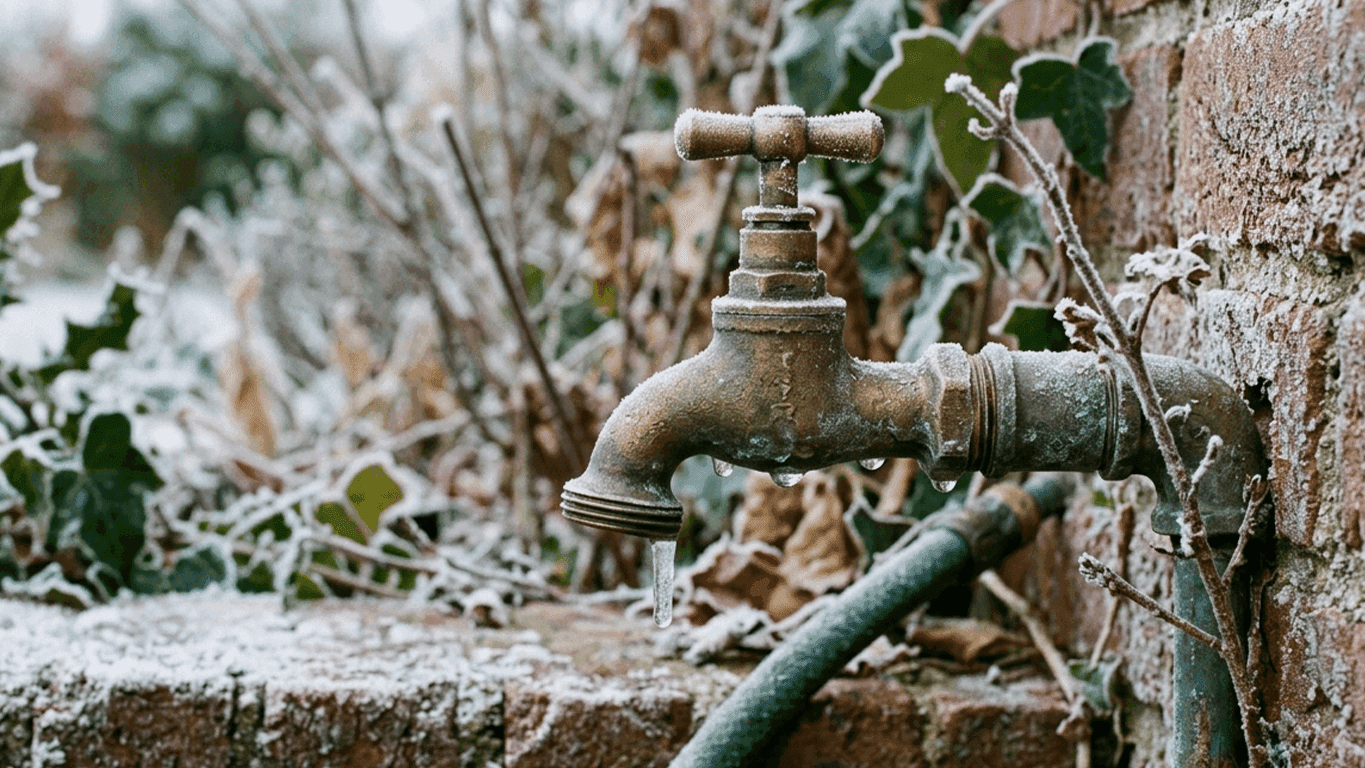
Pick a quiet time for the check, when a stiff or weeping valve is an inconvenience rather than an emergency. While you're at it, work through the rest of your winter jobs too, including protecting outdoor taps from freezing, since a frozen outside pipe is one of the most common reasons people need their stopcock in a hurry.
Is it worth upgrading to a quarter-turn valve?
If your stopcock is stiff, weeping around the spindle or won't close fully, replacing it with a quarter-turn lever valve is a sensible upgrade. It shuts off in one movement, the lever position shows at a glance whether it's open or closed, and it's much easier for an older relative to operate in an emergency.
Fitting one is a short job for a plumber, but it needs the outside stopcock turned off, so it's rarely a DIY task. Our guide to what a plumber typically charges gives a feel for call-out costs, and if you're already paying for a visit for something else, asking them to check or swap the stopcock at the same time makes the most of it.