The Tap Guide
Low water pressure from a tap is one of the most common plumbing complaints in the UK, and one of the easiest to get wrong. Sometimes the fix takes five minutes and costs nothing at all.
Other times it's a genuine limitation of how your home is plumbed, and no amount of fiddling with the tap will change that. Here's how to tell which situation you're actually in, and what's worth trying before you spend any money.
Rule out the cheap causes first
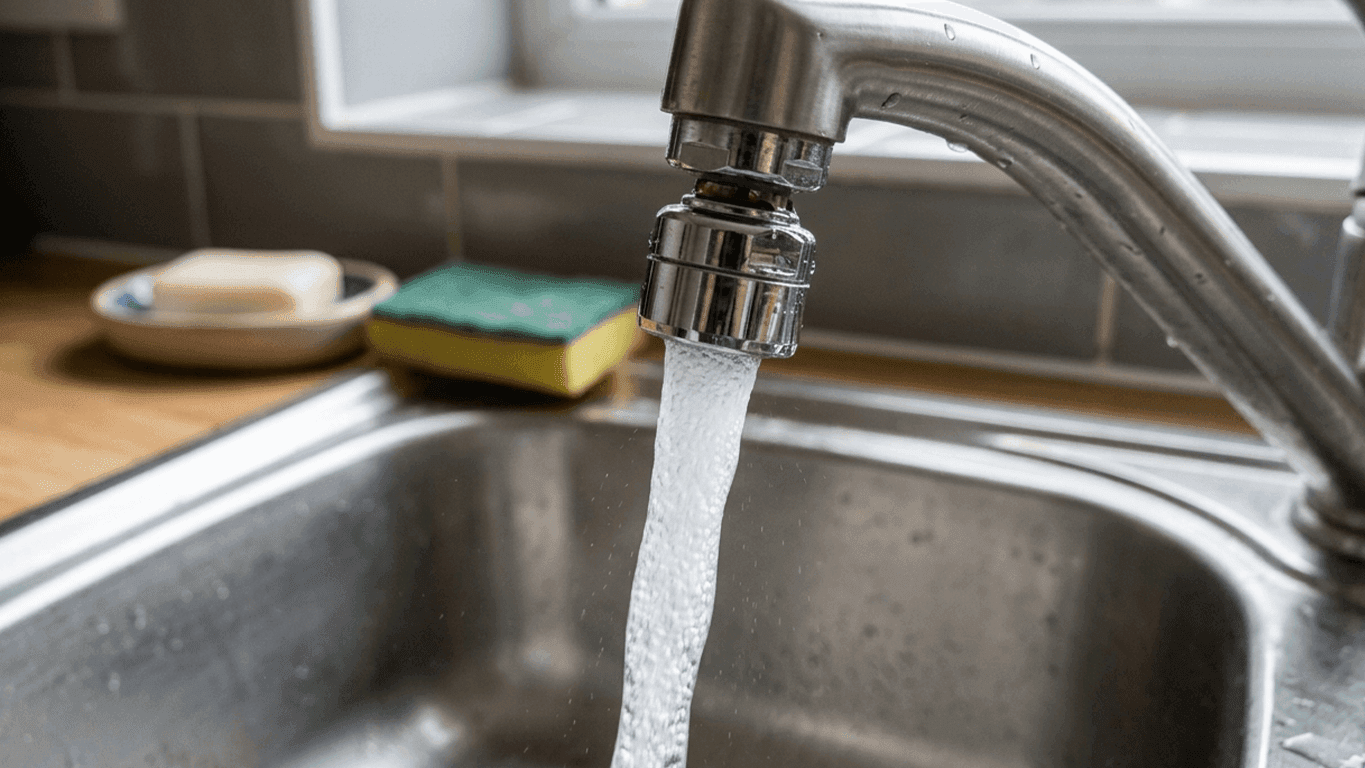
The single most common reason a tap suddenly feels weak has nothing to do with your mains supply. It's a clogged aerator or a scaled up cartridge inside the tap itself, and it's easy to mistake for a genuine pressure problem because the symptom looks identical, a thin, weak flow that never seems to build up.
If your area has hard water (much of the south and east of England, for instance), limescale builds up inside the little mesh aerator on the end of the spout and inside the tap's internal cartridge, gradually squeezing the flow down to a trickle.
The way to tell the difference is simple. Unscrew the aerator (it usually twists off by hand, or with a bit of grip from a cloth if it's stuck) and run the tap without it.
If the flow suddenly looks normal, or even too forceful, you've found your answer and it costs nothing to fix. A flow that's still weak with the aerator removed points further back, either to the tap's cartridge or to the pressure actually arriving at your property.
The jug test: measuring what you've actually got
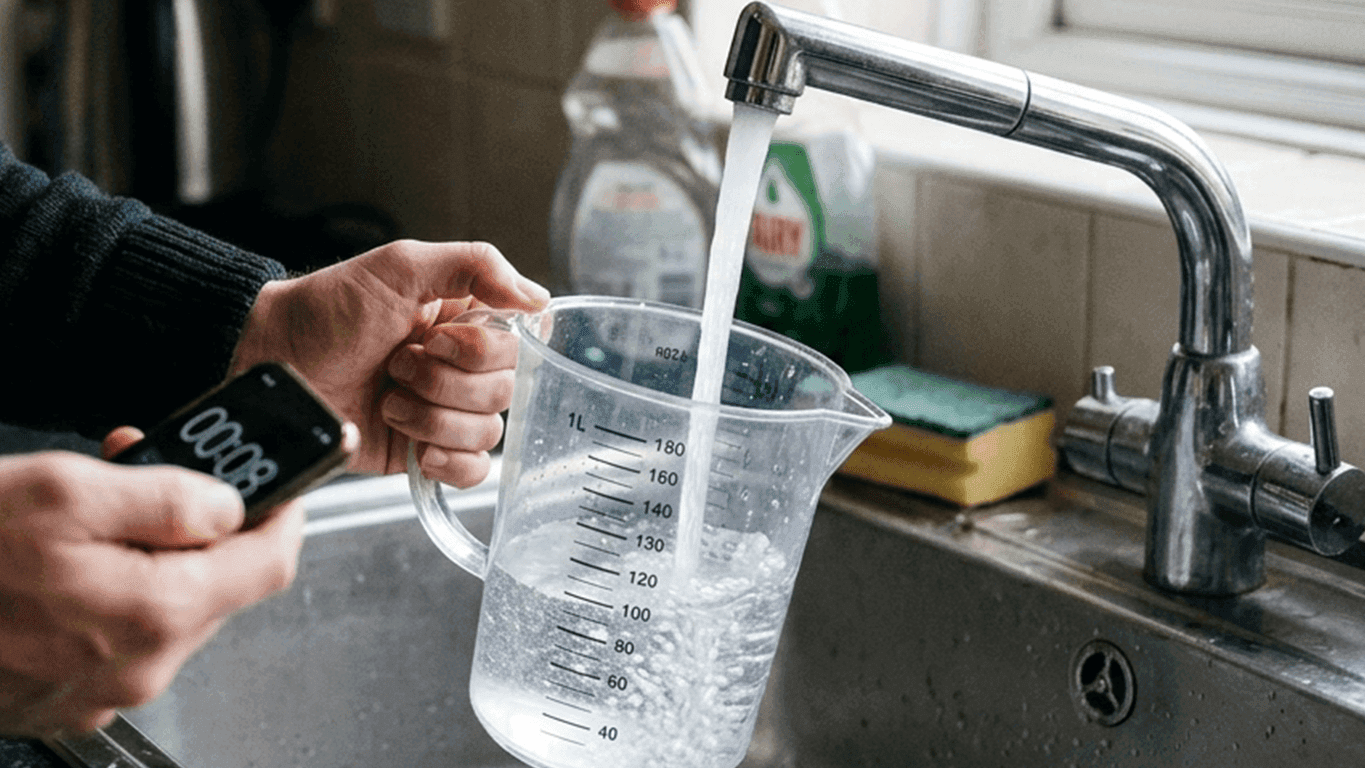
Before you assume anything about your mains pressure, measure it properly. Take a one litre jug, turn the cold tap on fully, and time how long it takes to fill.
If it fills in under 6 seconds, your flow rate is strong, upwards of 10 litres a minute. Between 6 and 15 seconds is a normal, workable flow for most households. Beyond 15 seconds and you've got a real problem worth investigating further, whether that's a blockage, a partially closed valve, or low mains pressure from the street.
Do this test on more than one tap in the house. If every cold tap is weak, the issue is likely upstream, either your incoming mains supply or the stopcock. Just the one tap struggling points almost certainly to something local, that tap itself or the pipe feeding it.
What kind of system are you actually working with
What you can realistically do next depends heavily on how your home is plumbed, and it's worth understanding this before you buy anything.
Our flow rate guide breaks down all three main UK setups properly, but the one that matters most for a low pressure problem is a gravity fed system, relying on a cold tank in the loft and a hot water cylinder rather than mains pressure. If you're on one, low pressure, especially on hot water taps, is often just how the system was designed to work rather than a fault as such.
Quick fixes that cost next to nothing
Assuming the jug test shows a genuine issue, and it isn't simply your system's design, work through these before anything more drastic:
- Descale or replace the aerator. Soak it in a bag of white vinegar overnight to dissolve limescale, or buy a replacement for a few pounds if it's badly clogged or damaged. Swapping it for a spray attachment is another option, covered in our guide to tap aerator attachments.
- Check the isolation valve under the sink. These small quarter turn valves sit on the pipework beneath most taps and are sometimes left partially closed after previous work, whether that was a repair, a new tap fitting, or a dishwasher install. Turn it fully open and see if that changes anything.
- Check your stopcock. The main stopcock, usually under the kitchen sink or near where the mains enters the house, occasionally gets nudged or isn't fully open after work elsewhere in the property.
- Look for a restricted supply pipe. Older homes sometimes have narrower lead or galvanised supply pipes that restrict flow throughout the house, which is a job for a plumber rather than a DIY fix.
Not a fault
A lot of taps, especially newer water saving models, have a flow restrictor built into the aerator on purpose to meet efficiency standards. It's a deliberate feature, and it's usually possible to remove it or swap it for a version with a larger flow rate if you'd rather have more volume than water savings.
When the tap itself is the real problem
If cleaning or replacing the aerator doesn't help, the tap's internal cartridge might be worn, scaled up, or simply not designed for a strong flow in the first place. Cheaper taps sometimes use narrower internal waterways that restrict flow regardless of what's arriving from your pipework. If your tap is several years old and has always felt a bit feeble even after descaling, it may simply be worth replacing.
Our guide to choosing a kitchen tap covers what to look for, and if you're deciding between styles, our bathroom tap buying guide explains how that choice affects flow too, since mixer taps blend hot and cold internally and can behave differently to two separate taps feeding one basin.
If you're fitting a replacement yourself, our tap installation guide walks through the process, and it's a good moment to check your isolation valves and flexible tails at the same time. Old, kinked, or partially blocked flexi hoses are another surprisingly common cause of weak flow that has nothing to do with your mains supply at all.
Gravity fed systems: why you can't just "increase it"
This is the bit that catches people out. If you're on a traditional gravity fed system, the pressure at your hot tap is determined by the vertical drop, in plumbing terms the "head", between your loft tank and the tap itself.
A tank that's only a metre or so above the bathroom below simply won't produce strong pressure, no matter what tap you fit or how clean the cartridge is. You simply cannot fix this by changing the tap.
The proper fixes here involve either raising the tank (rarely practical), fitting a shower pump to boost pressure specifically at the point of use, or converting the whole system to an unvented mains pressure cylinder, which is a significant plumbing job but solves the problem for the whole house rather than one tap at a time.
Shower pumps and accumulator tanks
For a single problem outlet, a small shower pump (sometimes called a booster pump) fitted close to the tank or cylinder can boost pressure locally without touching the rest of the system. These are common, well understood, and a competent plumber can usually fit one in a day. An accumulator tank works slightly differently, storing pressurised water to smooth out flow and give a stronger, steadier burst than the tank alone could manage, and it's often used alongside a pump rather than instead of one.
Neither of these is a job to take on without plumbing experience, since they involve working with the cold feed, electrics for the pump, and sometimes drainage for an overflow. They're a realistic and fairly common solution for a gravity fed home that wants better pressure without a full system replacement.
Whole house booster pumps and the rules you can't skip
If your entire mains supply is weak, not just one gravity fed outlet, a whole house booster pump might look like the obvious answer. It isn't quite that simple.
Water companies place limits on how much you're allowed to draw directly from the mains, partly to protect the shared network for your neighbours, and fitting a pump or booster capable of drawing above a set flow rate generally requires notifying your water supplier under the Water Supply (Water Fittings) Regulations before you start. An unauthorised booster pump can draw excessive flow from the mains and cause pressure problems for the whole street, which is exactly the kind of thing water companies actively check for.
Before buying anything like this, check the rules with a qualified plumber or a WaterSafe registered installer, who'll know what's permitted in your area and can handle any notification on your behalf. It's also worth getting written confirmation from your water company of what pressure you're actually entitled to receive, since in some rural or elevated areas, low mains pressure is simply a known limitation of the local network rather than something any pump can properly fix.
What it's likely to cost
What you end up spending here depends entirely on the cause, so treat the figures below as a snapshot from our last check rather than a quote:
- Descaling an aerator: free, just time and a bit of vinegar.
- A replacement aerator: typically £3 to £10 from a hardware shop or online.
- A new tap with a better cartridge: anywhere from £30 for a basic model to well over £150 for something from an established brand, covered in our tap brands guide.
- A plumber's call out to diagnose a supply issue: commonly £60 to £120 for the visit alone, more if further work is needed.
- A shower pump, supplied and fitted: usually somewhere between £250 and £600 depending on the pump and how straightforward the installation is.
- A whole house booster pump, supplied, fitted and properly notified: often £500 to £1,200 or more, since it involves electrical work, notification, and sometimes an accumulator vessel alongside it.
It's almost always worth working through the free and cheap checks first. A huge number of low pressure complaints turn out to be a £4 aerator.
Mistakes that lead to the wrong fix
- Assuming it's mains pressure without testing. A clogged aerator or scaled cartridge produces exactly the same symptom as actually low pressure, and it's the far more common cause, so always rule it out first with the jug test.
- Fitting a booster pump without checking if it's allowed. Mains fed booster pumps above a certain flow rate typically need notifying to your water company under the water fittings regulations. Fitting one without checking can breach water regulations and cause problems for your neighbours' supply too.
- Ignoring a partially closed isolation valve. These get nudged during other work far more often than people realise, and it's a five minute check that costs nothing.
- Expecting a new tap alone to fix a gravity fed system. If the pressure problem is caused by the height of your loft tank, no tap, however expensive, will change the physics of it.
- Overtightening or forcing a stuck aerator. This can crack the spout thread or damage the finish. If it won't budge with a cloth and gentle grip, use a proper strap wrench rather than pliers directly on the metal.
- Not testing more than one tap. Diagnosing based on a single outlet can send you down the wrong path entirely if the real issue is isolated to that tap's supply pipe rather than the whole house.
A strap wrench worth a look
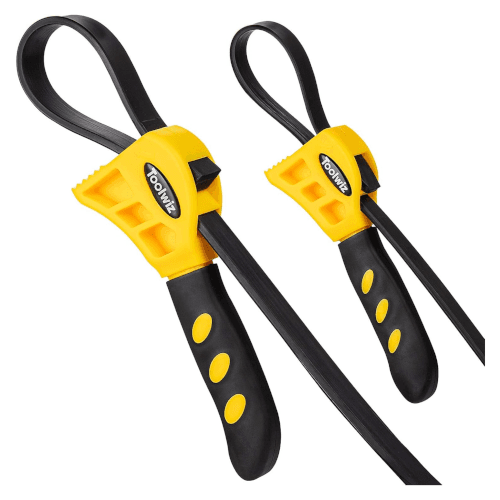
Toolwiz Rubber Strap Wrench Set
£13.67 (correct as of October 2026)
A two-piece rubber strap wrench set from Toolwiz, sized to grip anything from a slim aerator to a wider fitting without marking the finish.
We like
- Two sizes in one set, Ø3.75-10cm and Ø6.25-15cm, cover everything from a slim aerator to a wider pipe fitting
- Rubber strap grips tightly without marking chrome, plastic or painted finishes, safer than pliers directly on the metal
- Triangular tip locks the strap under tension as you turn, so it holds its grip rather than slipping mid-turn
Worth checking
- Sold mainly as a general jar and lid opener rather than a dedicated plumbing tool, so it's a multi-purpose buy rather than one built specifically for taps
- Pack contents
- 2 straps (small and large)
- Small capacity
- Ø3.75cm to 10cm (1.5in to 4in)
- Large capacity
- Ø6.25cm to 15cm (2.5in to 7.5in)
- Material
- Rubber strap
- Weight
- 350g
Specifications above listed by Amazon and may change. Check the current listing before buying. If we've got something wrong, let us know and we'll fix it.
When to call a plumber, or your water company
If the jug test shows weak flow on every tap in the house, cold included, and your isolation valves and stopcock are all fully open, the issue likely sits with your incoming mains supply rather than anything inside the house. That's worth reporting to your water company directly, since low pressure from the network itself is their responsibility to investigate, and if it isn't resolved to your satisfaction you can escalate a complaint through the Consumer Council for Water.
For anything involving pumps, cylinders, or altering how your system is plumbed, bring in a qualified plumber, ideally one registered with CIPHE or WaterSafe, who can diagnose properly, handle any notification requirements, and make sure the finished job actually complies with current water regulations rather than causing a bigger problem later.
If low pressure has you shopping around for a tap that performs better regardless, our top kitchen taps and top bathroom taps rankings both flag flow rate clearly, and it's worth reading them alongside a proper jug test result rather than guesswork.