The Tap Guide
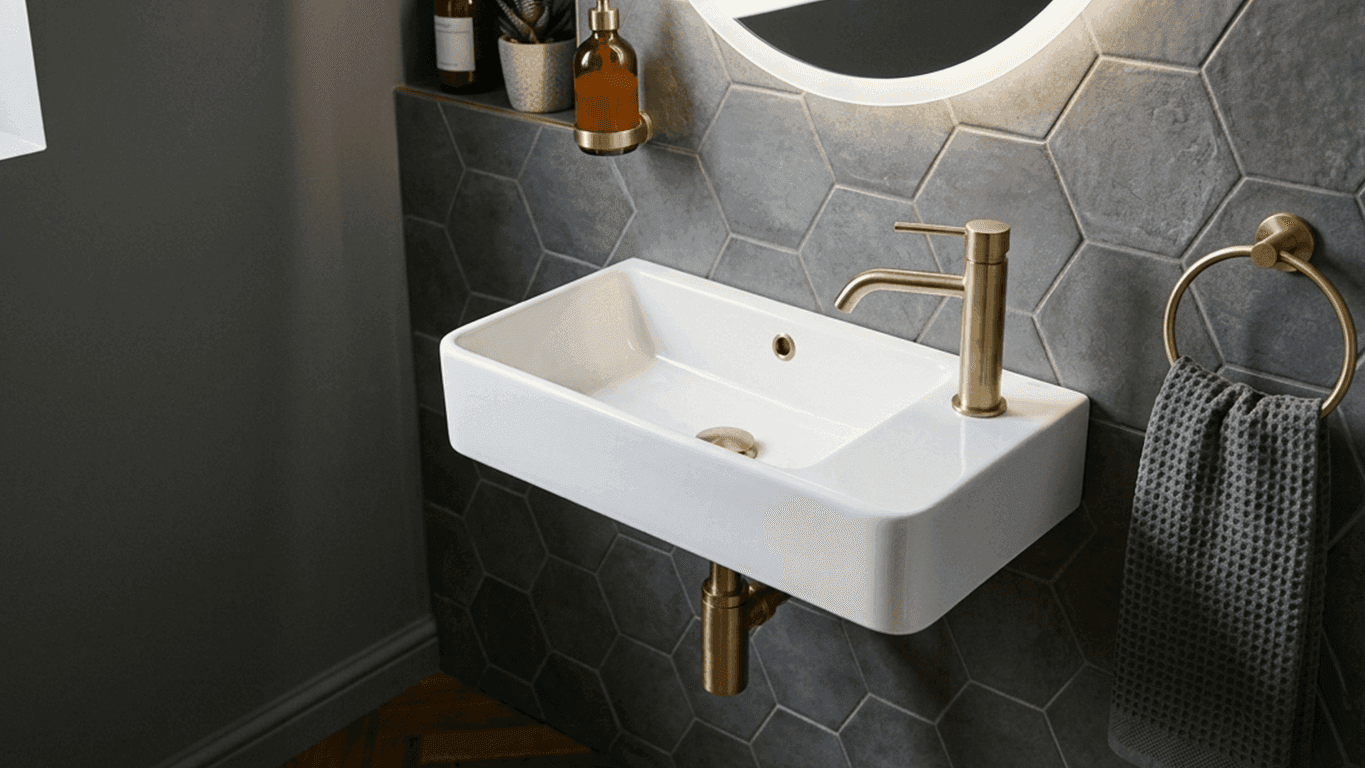
A cloakroom or downstairs toilet basin is often a small fitting, sometimes not much bigger than a large mixing bowl, and a standard tap designed for a full sized basin can dominate it completely.
Here's what to look for so the tap suits the space rather than fighting it, from spout projection and handle style through to the finish choices that read differently in a small, closely viewed room.
Why a normal basin tap often doesn't work
Most basin taps are designed and photographed on a standard sized basin, roughly 500 to 600mm wide.
A cloakroom basin can be considerably smaller, sometimes under 350mm, and a tap sized for the bigger fitting will often overhang the front edge, splash against the bowl wall, or simply look oversized against the basin beneath it.
This is one of the most common, entirely avoidable mismatches in a small cloakroom fit-out, and it's rarely obvious from a product photo alone.
Mono basin taps built for small spaces
Look specifically for a tap described as a "cloakroom" or "mini mono" basin tap rather than a standard basin mixer.
These are properly scaled down, with a shorter spout and a smaller overall footprint designed around exactly this problem, rather than a full sized tap that happens to look neat in a photo.
Our kitchen tap buying guide covers the single hole monobloc style these taps almost always use, which also suits a small basin's typically limited deck space.
Spout projection matters more than height here
On a full sized basin, spout height and reach across the bowl are the main things to check, covered in our guide on tap dimensions explained.
A small cloakroom basin brings projection into play just as much, how far the spout extends forward from the base, since a tap that projects too far will send water straight over the front edge of a shallow, narrow bowl rather than into the middle of it.
As a rough guide, look for a spout projection under around 100 to 110mm on a compact basin, and check the manufacturer's stated dimensions against your basin rather than assuming a tap described as "compact" is automatically short enough.
Single lever versus two handles in a tight space
A single lever mono tap is the more practical choice in most cloakrooms, both because it's quicker to use one handed and because it takes up less visual and physical space than a two handled traditional tap on a small deck.
Two handled taps can still work in a period style cloakroom, but check the combined footprint of both handles plus the spout against your basin's actual deck area before committing, since it adds up faster on a small fitting than people expect.
Finish and scale in a small room
A cloakroom is often the smallest, most closely viewed room in the house, which means finish and proportion matter more here than in a larger bathroom you see from further away.
Chunky, oversized handles or an unusually tall spout can feel disproportionate in a small space even if the same tap would look perfectly balanced on a bigger basin.
Our guide on tap finishes compared is worth a look if you're coordinating the tap with other small fittings in the room, since a consistent finish does more visual work in a small space than in a large one.
Handy to know
A cloakroom basin is also usually fed by a smaller, often lower pressure supply run than a main bathroom, particularly in an older house. Check flow rate expectations against our guide on what flow rate you need if the room has always felt like a weak trickle compared with the rest of the house.
Fitting into a corner or vanity unit basin
Many cloakrooms use either a corner basin or a small vanity unit with limited deck space around the tap hole.
In both cases, check the tap's base diameter against the available flat area, and consider a wall mounted tap if deck space is really too tight for anything to sit comfortably, though this is a bigger plumbing job than a straightforward deck mounted swap and usually needs a plumber.
Our guide on installing a tap yourself covers the deck mounted process if that's the route you're taking.
Mistakes worth avoiding
- Buying a standard sized basin tap without checking projection. A tap that looks fine in a photo can overhang a compact basin and send water over the front edge.
- Assuming "compact" on a listing means small enough. Check the actual stated spout projection and height against your basin's real dimensions rather than trusting the description alone.
- Choosing a two handled tap without checking combined footprint. Two handles plus a spout add up faster on a small deck than they do on a full sized basin.
- Ignoring flow rate in an older cloakroom. A smaller, older supply run can mean noticeably weaker pressure than the rest of the house, worth checking before assuming the tap itself is faulty.
- Overlooking scale in a small, closely viewed room. A chunky handle or tall spout that works elsewhere can feel out of proportion in a small cloakroom.
Once you've settled on the right scale of tap, our guide on choosing a bathroom tap covers the wider decision, and our basin taps roundup includes options across a range of sizes.