The Tap Guide
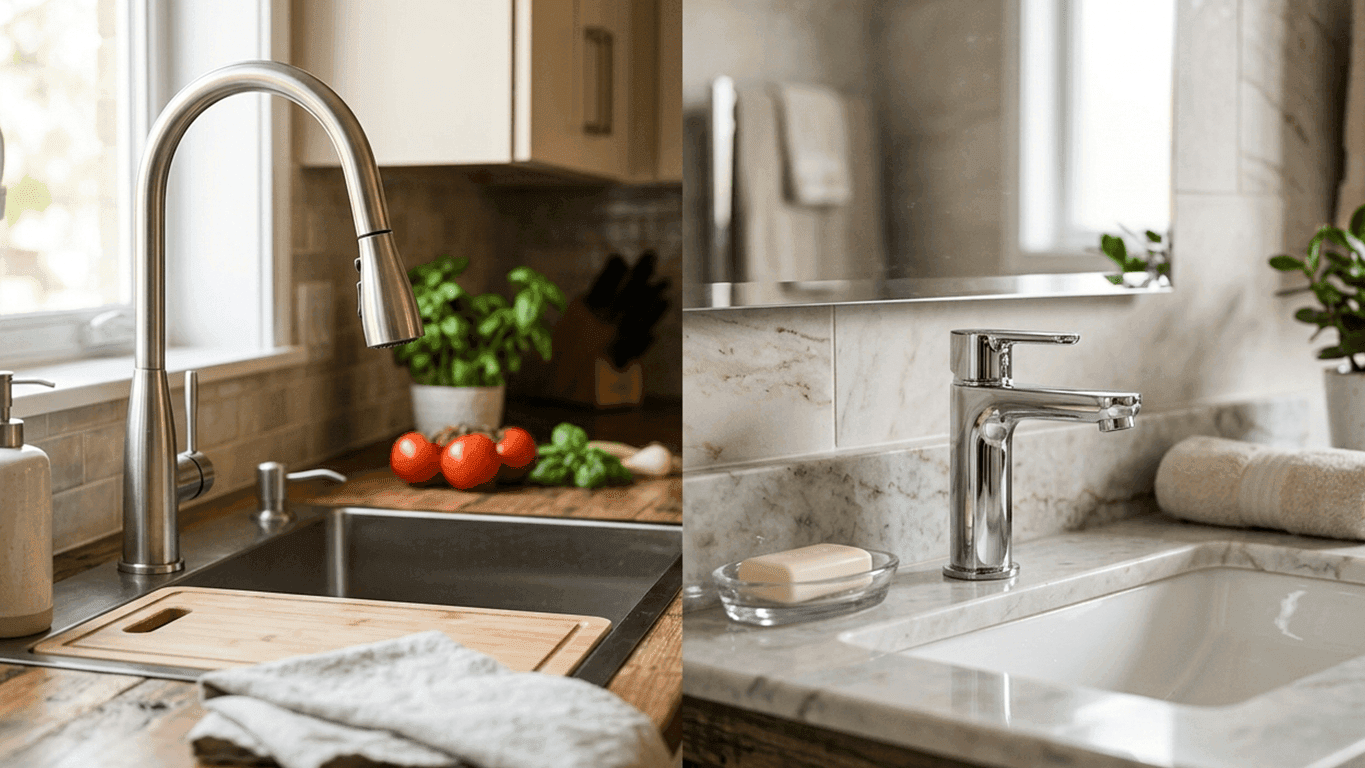
Stand a kitchen tap and a bathroom tap next to each other in a showroom and you could easily mistake one for the other. Same chrome finish, same general lever-and-spout shape, sometimes even the same price bracket.
It's an easy mix up to make, and plenty of people have bought the wrong one thinking a tap is just a tap. But underneath that similar look, they're built to do quite different jobs, and the differences matter more than most people realise until they try to fit the wrong one in the wrong room.
Spout height and reach
The most obvious difference is size, but it's not just about looking bigger for the sake of it. Kitchen taps sit higher and reach further because they need to clear tall pans, watering cans, and washing up bowls sitting in the sink. A typical kitchen tap spout might sit 180 to 250mm above the sink base, with a reach of 200mm or more out from the wall, enough to fill a stockpot or rinse a roasting tin without you having to tip the whole thing sideways under a low spout.
Bathroom basin taps are built the opposite way. Basins are shallow and narrow, so a tall spout just means water splashing straight past the plughole and onto the floor or your worktop.
Basin taps typically sit much lower, often under 150mm, with a shorter reach that lands the water where the basin actually is. Fit a kitchen tap on a bathroom basin and you'll find water bouncing off the porcelain and soaking the surround every time someone washes their hands, which gets old fast.
Flow rate and water use
Kitchen taps are generally built for a decent flow, because filling a kettle or a pasta pot quickly matters more in a kitchen than saving every last litre. Many kitchen taps run at 6 litres per minute or higher, sometimes with less aeration in the stream so it fills containers faster rather than gently, which is exactly what you want when you're stood there waiting for a pan to fill.
Bathroom taps, particularly basin taps, are usually flow-restricted or heavily aerated, often down around 4-6 litres per minute or lower on water-efficient models. This isn't just about saving water, though that matters too, and it's a topic worth reading up on if you're keen to cut your bills, the Energy Saving Trust has good guidance on this. Our own guide on what flow rate you actually need covers this in more depth too.
A softer, more aerated flow also reduces splashing in a small basin bowl and feels gentler when you're washing your hands or face. Put a high-flow kitchen tap on a small basin and you'll get water everywhere within a week.
The water regulations angle
This is the part people miss most often, and it's not just a style preference, it has real practical consequences. Kitchen cold taps in the UK are usually plumbed to serve as the "wholesome water" supply, meaning the water that comes out is suitable for drinking, cooking, and filling the kettle. That has real implications for what fittings can be connected to it and how it needs to be protected from contamination.
If your kitchen tap also has a dishwasher or a boiling water function plumbed in, there are specific requirements around backflow prevention, things like check valves or a physical air gap, to stop contaminated water siphoning back into the drinking supply. This is exactly the kind of thing covered by WRAS approval, and it's a good idea to check a kitchen tap or any connected appliance carries the right approval before fitting it, rather than finding out after the plumber's already left.
Bathroom taps don't typically face the same drinking water considerations, since basin and bath taps aren't usually the source people drink from, so the regulatory bar for a straightforward basin mixer is lower. If you're ever unsure what applies to your setup, a qualified plumber registered with WaterSafe can confirm what's needed before any work starts.
Quick check
If your kitchen tap will have a dishwasher, boiling water tap, or filtered drinking water function connected to it, confirm it (or the connected appliance) carries WRAS approval before you buy, not after it's installed.
Tap type and installation differences
Kitchen and bathroom taps also tend to differ in how they're actually built and fitted. Kitchens have largely moved to single-hole monobloc taps, often with a pull-out or pull-down spray head on a long flexible hose, because that hose length and mobility earn their keep when you're rinsing a big roasting tray or filling a bucket in the corner of the sink.
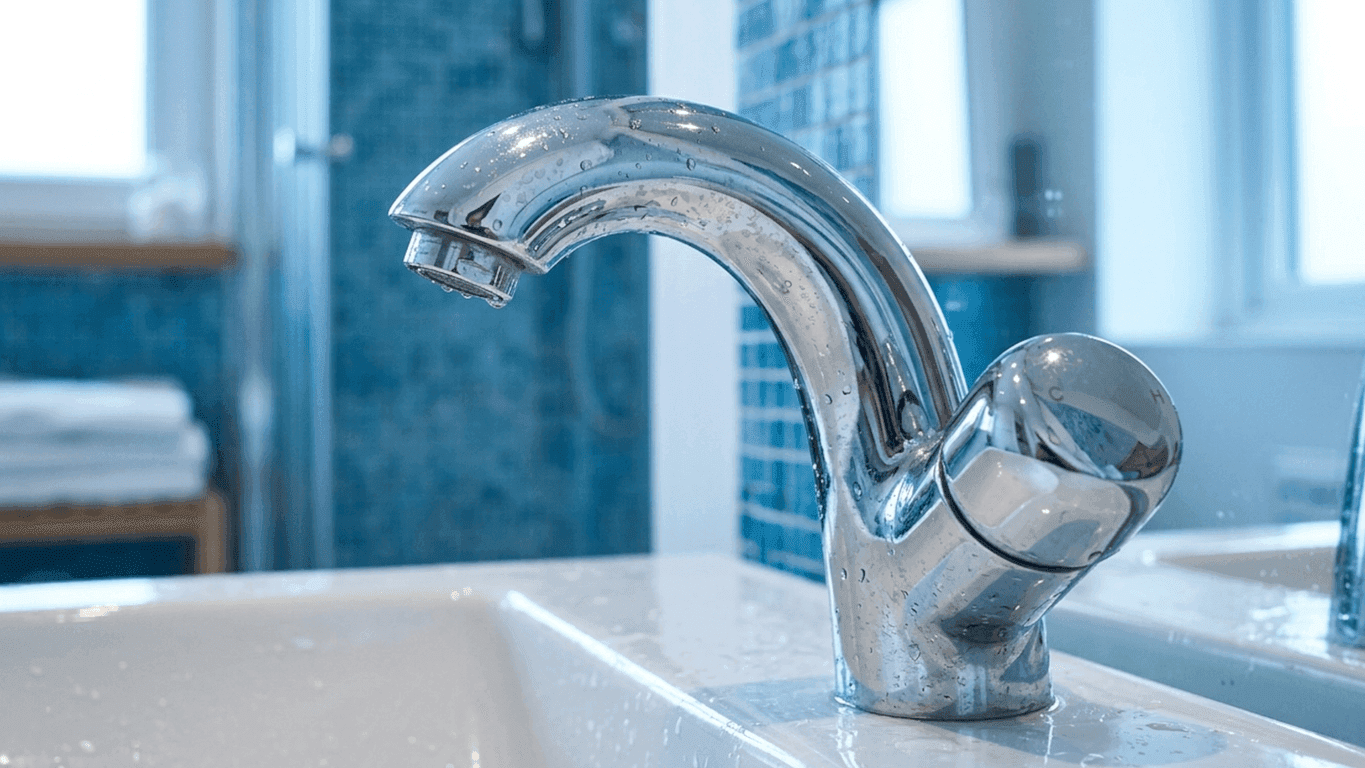
Bathrooms still see plenty of monobloc mixers too, but you'll also find more three hole and pillar tap setups in period style bathrooms, where separate hot and cold taps sit either side of the basin.
The pipework behind the scenes differs as well. A kitchen tap with a boiling water or filtered function needs extra space under the sink for a tank or unit, plus a dedicated power supply in some cases, none of which a standard bathroom basin tap ever requires. That's worth factoring in early if you're planning a kitchen upgrade, since it can affect cabinet layout as much as the tap choice itself.
Style and finish
Kitchen taps tend to look more functional and heavy duty. Bigger levers, chunkier bodies, often a pull-out or pull-down spray head built in for rinsing, because a kitchen tap gets used constantly for everything from filling glasses to washing muddy vegetables.
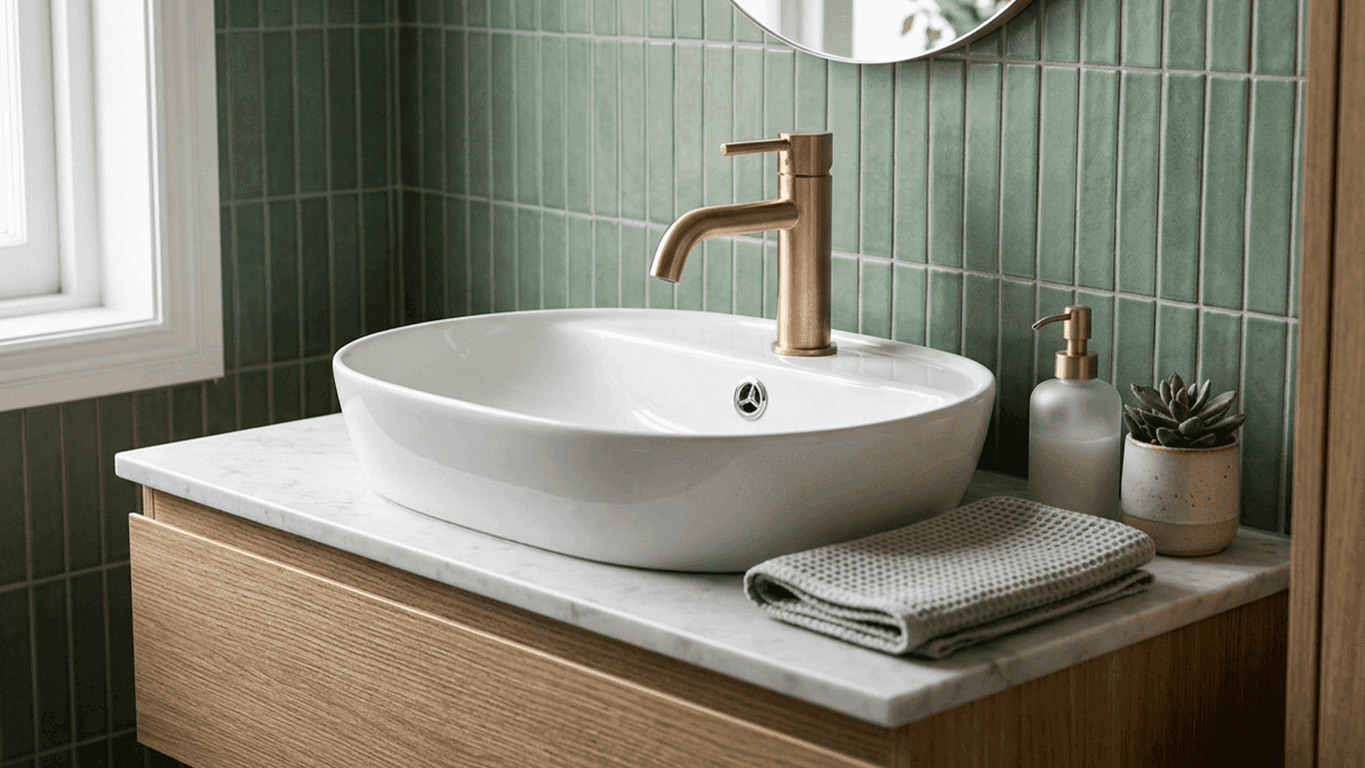
Bathroom and basin taps, on the other hand, are often smaller, more decorative, and designed to sit alongside a matching bath filler or shower valve as part of a coordinated look. You'll see more slimline, minimalist designs in bathrooms, where the tap is as much a design feature as a working fitting.
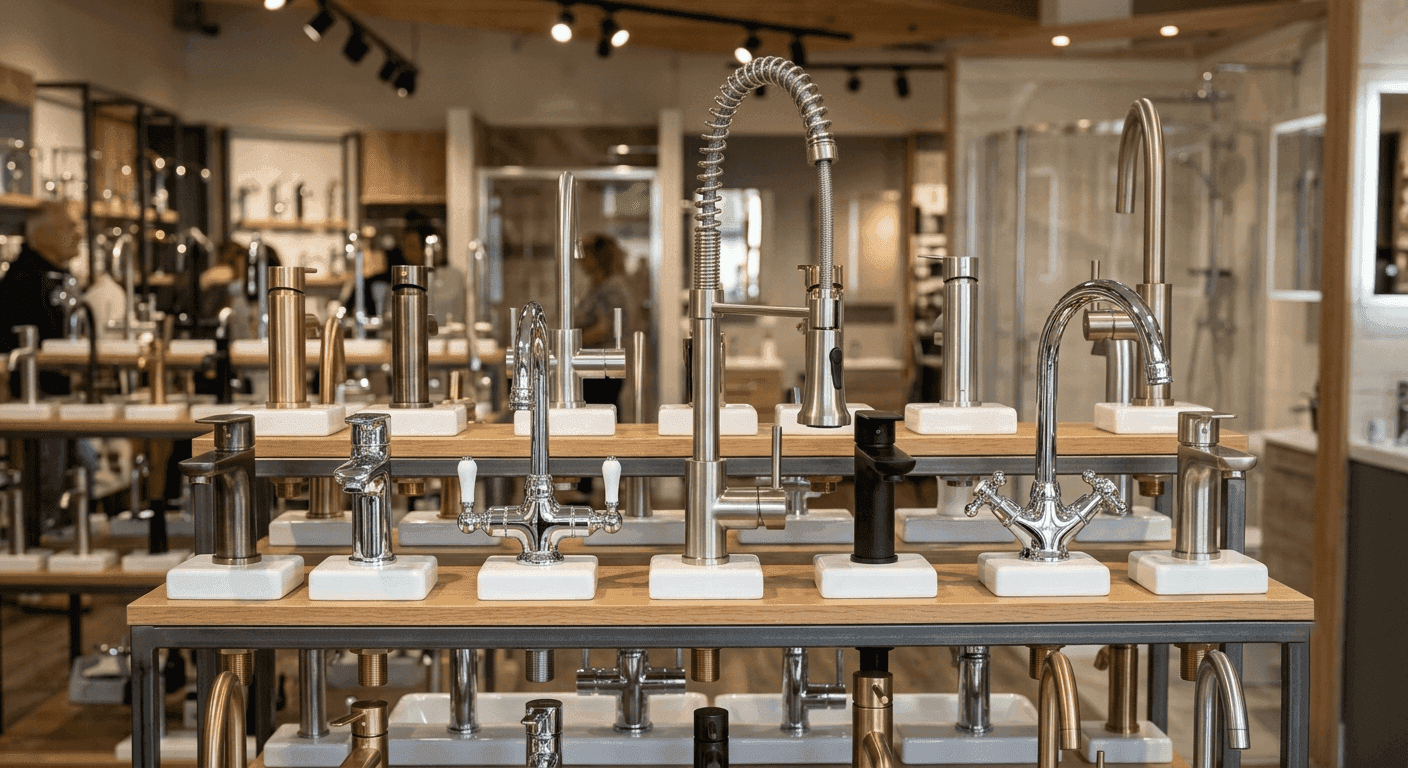
That's not a hard rule, plenty of modern kitchen taps are sleek and minimalist too, but the underlying engineering (spout height, flow rate, valve type) still follows the room it's designed for even when the styling overlaps on a showroom shelf. If you want a proper rundown of what to look for before you buy, our kitchen tap buying guide covers the full decision in more depth, and it's a good companion piece to this one.
What about cost
Kitchen taps with extras like pull-out sprays, boiling water function, or filtered water built in tend to sit well above the price of a simple basin mixer, sometimes several times the cost once you add plumbing for a separate hot water tank or filter cartridge underneath the sink. A straightforward basin tap for a bathroom, without any of that added plumbing, is usually one of the cheaper taps you'll buy for a home, often a fraction of what a fully loaded kitchen tap costs.
It's a fair trade-off though, since a kitchen tap earns its keep every single day in ways a basin tap simply doesn't, and the extra spend on a good one tends to show up in reliability over the years rather than just convenience.
Can you just swap one for the other?
In theory, if the tap hole size matches and the tap type suits your existing pipework, you can physically fit a kitchen tap on a bathroom basin or vice versa. It rarely works well in practice.
The reach and height will likely be wrong for the basin or sink shape, the flow rate won't suit the room, and if it's a kitchen tap with any drinking water function, you'll be fitting kit into a bathroom where it serves no purpose and may not even be plumbed correctly to work as intended.
The safest approach is to buy the tap designed for the room you're fitting it in. If you're doing the install yourself, our guide on how to install a tap walks through the practical steps, and it's worth reading before you commit to a specific model so you know what pipework and connections you're working with beforehand.
Where people mix the two up
- Buying a kitchen tap for a bathroom basin because it looked nice. The taller spout and higher flow rate will cause splashing and won't suit a small basin bowl, no matter how good it looks in the showroom.
- Ignoring reach and splash clearance on a small basin. Always check the spout reach against your basin's actual depth and width before buying, not just the tap's overall look or finish.
- Overlooking WRAS or water byelaw requirements for kitchen taps with extras. A tap feeding a dishwasher, boiling water function, or drinking water filter needs the correct backflow protection, so check the approval before you install rather than after.
- Mismatching finish across the room. Fitting a chrome kitchen tap alongside brushed brass bathroom fittings, or vice versa, throws off an otherwise coordinated look, so check finish consistency across taps, towel rails and any other fixtures.
- Assuming a higher price automatically means it's suitable for any room. An expensive kitchen tap with every feature going is still the wrong choice for a bathroom basin if the reach and flow don't fit the space.
- Not checking existing tap hole count before buying. A monobloc replacement for an old three hole setup, or the other way round, can mean extra work capping or drilling holes that you hadn't budgeted for.
Kitchen and bathroom taps might share a supplier catalogue and a similar look on the shelf, but they're solving different problems day to day. Get the reach, flow rate, and any water regulation requirements right for the room, and the tap will do its job properly for years rather than causing splashing, poor fill speed, or a compliance headache further down the line. For more on choosing well for each room, take a look at our bathroom tap buying guide and our kitchen taps roundup.