The Tap Guide
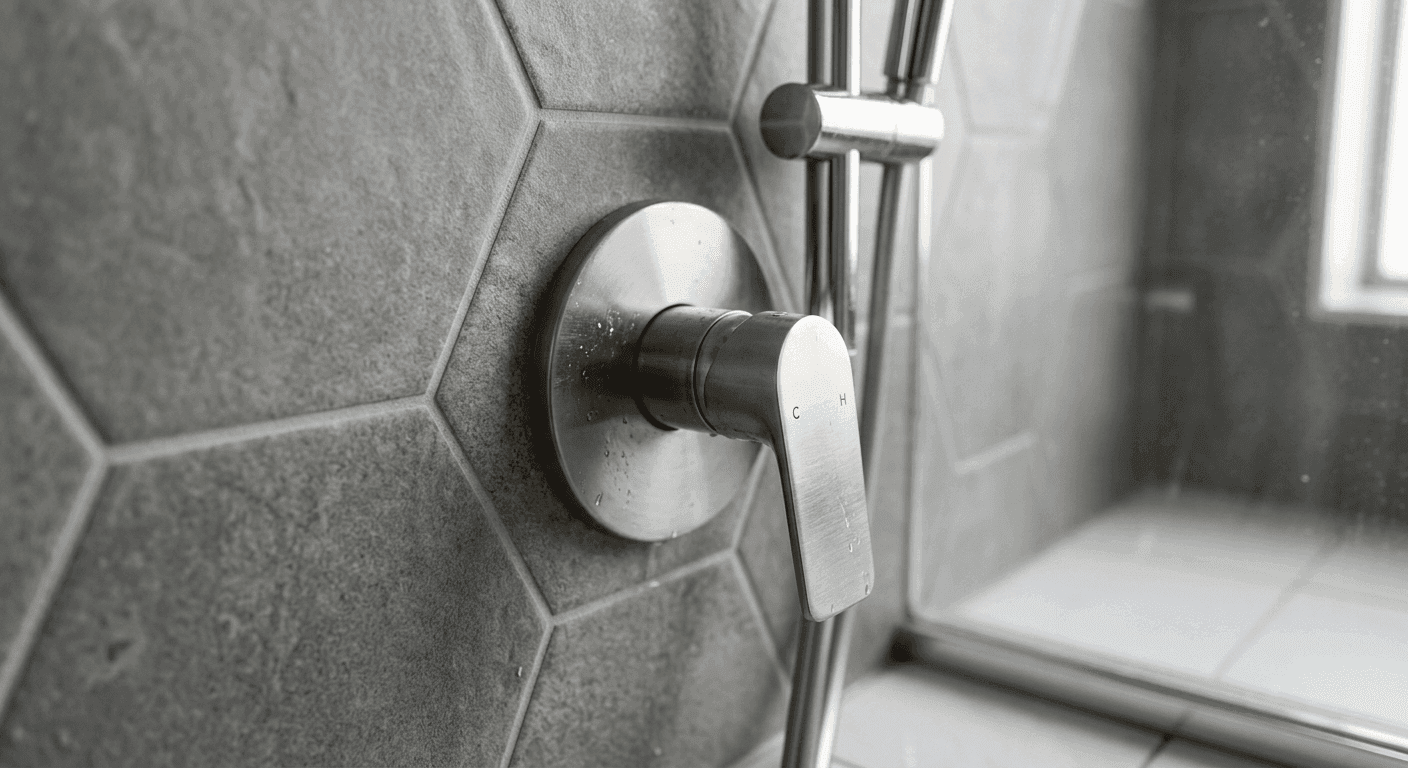
A shower tap, or shower valve, is one of the few tap purchases in the house where getting the choice right is a genuine safety question, not just a comfort one. Here's what actually matters before you buy.
Beyond safety, the type of valve you choose also affects day to day comfort, how quickly it reacts if someone else runs a tap elsewhere in the house, and how much you'll spend both upfront and on installation if new pipework's involved.
Manual mixer or thermostatic valve
A manual mixer valve blends hot and cold water at whatever ratio you set, but that ratio can shift if pressure changes elsewhere in the house, someone flushing a loo or running a kitchen tap can send a sudden blast of hot or cold your way. This is exactly the problem a thermostatic valve solves, holding your chosen temperature steady automatically by compensating for those pressure changes before they ever reach you.
For most households, thermostatic is worth the extra cost. Look for a valve rated TMV2 for standard domestic use, or TMV3 if the shower will be used by young children, elderly relatives, or anyone with reduced sensitivity to temperature. RoSPA's guidance on preventing shower scalds covers why this rating exists and who it matters most for.
Our top pick right now
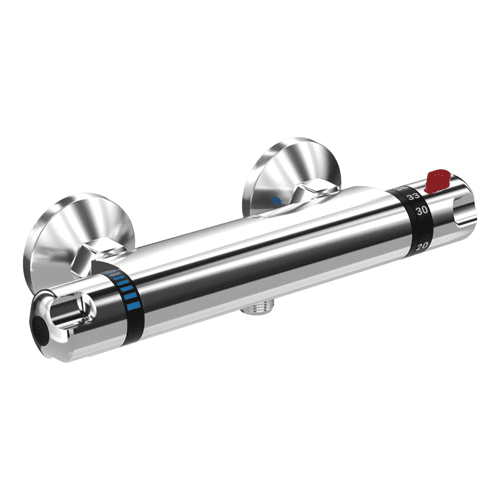
Exposed or concealed valves
An exposed valve has its pipework visible on the wall surface, which is quicker and cheaper to fit and easier to service later, since nothing needs to be opened up to reach it. Its counterpart, the concealed valve, hides the pipework behind the wall, leaving only the controls and outlet visible, giving a cleaner, more contemporary look at the cost of a bigger first-fix job and a harder repair if the valve itself ever needs attention.
If you're doing a full bathroom renovation, concealed is worth considering for the look alone. For a straightforward like-for-like swap, exposed keeps the job simple and avoids opening up tiling unnecessarily.
Matching a shower valve to your water system
This matters more for a shower than almost any other tap in the house, since a weak or unbalanced flow is far more noticeable standing under it than at a basin. On a combi boiler or unvented cylinder, most shower valves perform as specified. On a gravity fed system, particularly one with a loft tank installed low above the bathroom, pressure can be too weak for some valves to work properly at all.
If your home is gravity fed and pressure is properly low, a pumped shower or a valve specifically rated for low pressure systems is worth looking for rather than assuming any standard valve will perform. Our guide on what flow rate you need explains how to check your system and what figures to look for.
Digital and smart showers
Digital showers control temperature and flow electronically rather than through a traditional mechanical valve, often with a separate control panel and a processor unit hidden elsewhere, in an airing cupboard or loft. They're a useful option for a low pressure gravity fed home, since the processor can boost flow in a way a standard valve can't, and many offer presets and remote start as a bonus rather than the main reason to buy one.
They cost considerably more than a standard thermostatic valve and need a mains power supply near the processor unit, wired by a qualified electrician alongside your plumber, so factor in both the higher purchase price and the slightly more involved installation before choosing one over a traditional valve.
Shower heads and outlets
A fixed head gives a simple, low-maintenance shower with nothing to adjust. Riser rails let you slide a handset up and down to suit different heights in the household instead, particularly useful in a family bathroom. Going further still, a dual outlet valve feeding both a fixed head and a handset gives the most flexibility, but costs more and needs a valve built to handle both outlets at once without a noticeable drop in pressure to either.
Safety features worth looking for
Beyond the TMV rating itself, a scald guard, sometimes called a temperature stop or safety catch, physically limits how far the handle turns toward maximum heat without a deliberate extra push. It's a small feature that matters a lot in a household with children, and worth checking for specifically rather than assuming every thermostatic valve includes one as standard.
Number of outlets and future flexibility
Even if you only want a fixed head today, it's worth thinking about whether you might add a handset or a second outlet later. A single outlet valve is cheaper, but swapping it for a dual outlet model down the line usually means replacing the whole valve rather than just adding a fitting, since the internals differ meaningfully between the two.
If there's any chance you'll want a handset on a riser rail alongside a fixed head eventually, particularly in a family bathroom where washing children's hair is easier with a handset, it's often cheaper to buy a dual outlet valve outright than to upgrade later.
Cartridge type and long term reliability
Like other taps, shower valves rely on an internal cartridge to control flow and temperature, and the same rules apply as elsewhere in the house: a better made cartridge feels smoother from day one and tends to stay that way for longer. Cheaper valves can develop a stiffer or less precise action within a couple of years, particularly in hard water areas where limescale affects the internals faster.
Our guide on what a ceramic disc tap is explains this mechanism in more detail, and the same quality differences it describes for kitchen and basin taps apply just as much to a shower valve's cartridge.
Price points worth knowing
Manual mixer valves start from around £60 to £100 and are a reasonable choice for a low-use guest bathroom (figures as of our last check). Thermostatic valves typically run from £100 to £250 for a solid mid-range exposed or concealed option, with the TMV2 rating and a decent cartridge included as standard. Premium thermostatic valves with additional outlets, or digital shower systems, commonly run from £350 upward, with much of that cost reflecting the extra mechanism and control electronics rather than just finish quality.
If you're unsure
A CIPHE registered plumber can check your home's water system against a specific valve's minimum pressure rating before you buy, which is far cheaper than buying the wrong valve and having to return it.
Where people cut the wrong corner
- Buying a manual mixer valve for a family bathroom to save money. The scald protection a thermostatic valve offers is worth the extra cost almost every time children are involved.
- Not checking pressure compatibility on a gravity fed system. Some valves simply won't perform, or won't work at all, on very low pressure without a pump or digital system.
- Choosing concealed purely for looks without planning the install properly. It's a bigger first-fix job than an exposed valve and needs to be sorted before tiling, not after.
- Assuming a dual outlet valve performs the same as a single outlet one. Check it's rated to handle both a fixed head and a handset running together without a big pressure drop.
- Skipping the TMV rating check. Not every thermostatic-sounding valve is actually TMV2 or TMV3 rated; check the specification rather than assuming from the description alone.
Once you know what suits your bathroom and your water system, our top 10 shower taps page is a good place to compare specific valves, and our wider guide on choosing a bathroom tap covers basin and bath taps too if you're planning a fuller refit.