The Tap Guide
Boiling water taps have gone from a niche showroom feature to a genuine mainstream option in UK kitchens, and filtered taps aren't far behind. Here's what's actually inside one, what it costs to run, and whether it's worth the space under your sink.
They're not cheap, and fitting one usually means finding room under the sink for a separate tank or heating unit, so it's worth understanding exactly what you're paying for before deciding whether the convenience is worth the outlay.
What a boiling water tap actually is
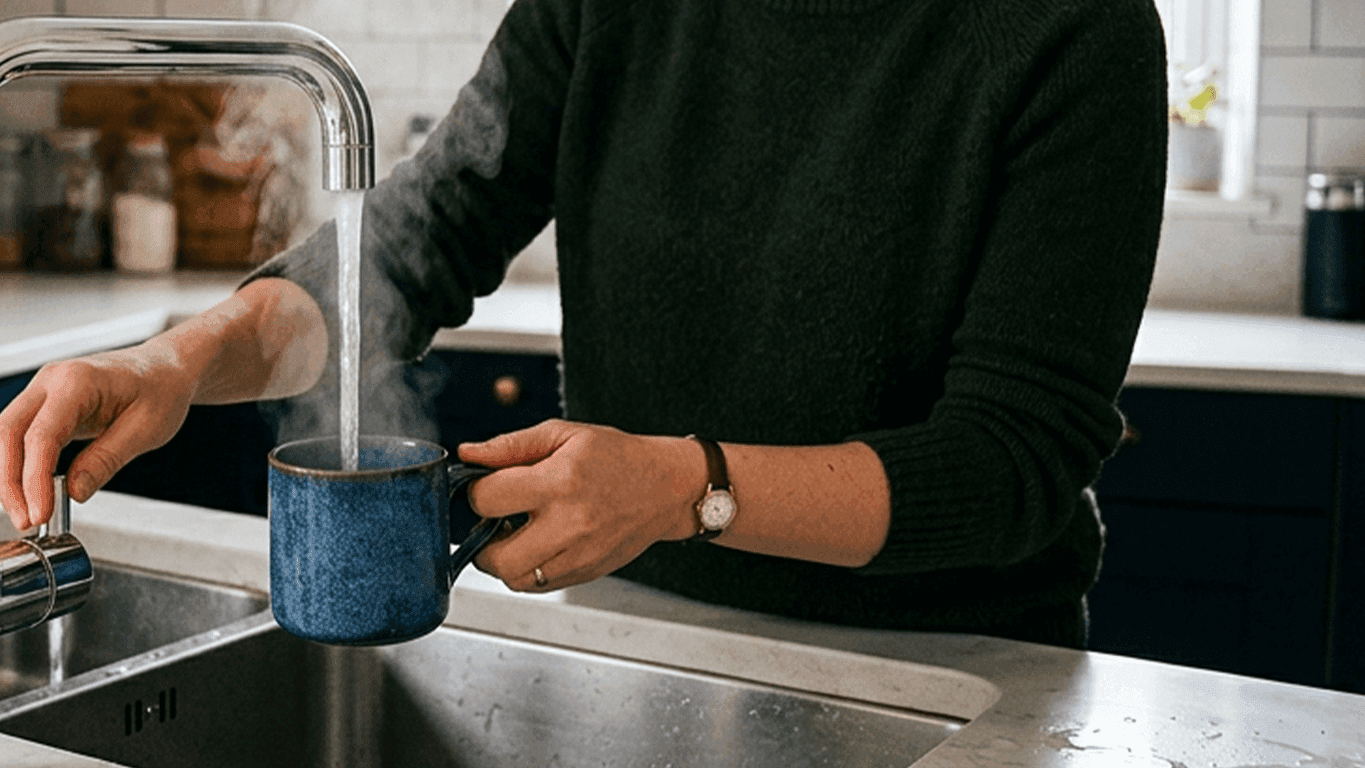
A boiling water tap delivers water at, or very close to, 100°C straight from the spout, on demand, without a kettle.
It works alongside your normal hot and cold supply rather than replacing it, so most models are really two taps built into one body: a standard mixer for everyday use, and a separate lever or button for the boiling function.
The water comes from a small, insulated tank fitted under the sink, kept permanently hot and topped up from the mains as you use it, rather than heated fresh each time you press the button. That's what makes it instant rather than kettle-speed.
Filtered and 4-in-1 taps
Many boiling water taps are sold as "3-in-1" or "4-in-1" models, adding filtered cold water, and sometimes chilled or sparkling water, to the standard hot, cold and boiling functions. The filter is usually a separate cartridge plumbed into the cold feed, removing chlorine taste and some sediment before it reaches the tap.
It's worth being clear on what a standard carbon filter does and doesn't do. Taste and clarity improve, but it doesn't turn hard water into soft water, and it isn't a substitute for a full water softener if limescale is your main concern.
Our top pick right now
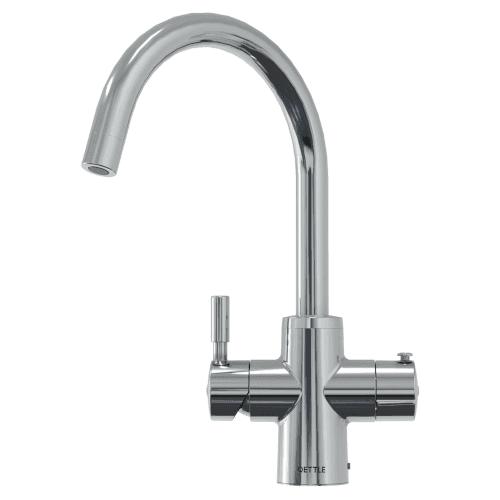
How the tank and installation actually work
The tank itself needs space in the cabinet under the sink, typically a bit bigger than a large kettle, plus a dedicated electrical spur to keep the water hot around the clock.
This is the main reason boiling water taps cost more to fit than a standard mixer: it's not just the tap, it's the tank, the wiring, and usually a qualified electrician alongside whoever fits the plumbing.
If you're tight on space under the sink, measure the tank's dimensions against your cabinet before ordering, since a boiling water tap installation that gets halfway through and then doesn't fit is a surprisingly common, entirely avoidable problem.
Safety features worth checking
Because the water really is at boiling point, safety features matter more here than on almost any other kitchen tap.
Look for a child lock or a two-step action, needing a button press and a turn together, so the boiling function can't be triggered accidentally.
A guarded or recessed spout, and a support in the manual for keeping the tank's pressure release valve clear, are both worth checking on a specific model before buying.
One to check
Boiling water taps and their tanks should carry WRAS approval the same as any other tap fitting. Check this specifically for the tank unit as well as the tap itself, since they're sometimes sold and rated separately.
Running costs: is it actually cheaper than a kettle
Keeping a small tank hot around the clock uses a modest, constant trickle of electricity, typically working out to somewhere in the region of £15 to £40 a year depending on the model and your electricity tariff.
Against that, you're saving the energy of boiling a full kettle every time you only need one mug's worth, which many manufacturers claim roughly balances out or comes out slightly ahead for households that make tea and coffee often.
In practice, the honest answer is that it's not primarily a money saving purchase. The real benefit is convenience and worktop space, not a dramatically lower energy bill.
Filter cartridge replacement
Filter cartridges typically need replacing every four to six months, depending on your water usage and local water hardness, and cost roughly £20 to £40 each. It's worth factoring this into the tap's ongoing cost rather than just the upfront price, since skipping replacements lets the filter's effectiveness drop off gradually rather than fail obviously.
Digital displays and smart features
Some boiling water taps add a small LED or digital display on the spout or base, showing water temperature, a use counter, or a filter-life indicator that counts down to your next cartridge change. It's a genuinely useful feature for the filter reminder alone, since forgetting a replacement is one of the easiest things to let slide, as covered above.
A handful of models go further with app connectivity, letting you check filter status or set a boil-safety lock remotely from a phone. It's a nice-to-have rather than something worth paying a premium for on its own, and it adds another thing that can eventually need a firmware update or a battery change, so weigh it against a simpler mechanical model if you'd rather have fewer things that could go wrong.
Boiling water taps and existing water systems
Because the tank draws from your cold mains supply and heats it independently, a boiling water tap generally works fine regardless of whether the rest of your home is on a combi boiler, a gravity fed system, or an unvented cylinder.
The boiling function itself isn't affected by the same hot water pressure issues that can trouble a mixer tap's hot side.
The standard hot and cold mixer side of the tap still follows the same rules as any other kitchen tap, though, so it's worth checking our guide on what flow rate you need for that part of the tap's performance if your home is on a lower pressure gravity fed system.
Retrofitting one into an existing kitchen
Adding a boiling water tap to a kitchen that didn't have one, rather than replacing an existing boiling water tap like for like, usually means finding space for the tank in a cabinet that wasn't planned around it.
Corner cabinets and the space either side of a sink bowl are the most common spots, though it's worth measuring carefully before committing, since a tank wedged in too tightly makes routine maintenance and eventual replacement far more awkward than it needs to be.
If you're doing a fuller kitchen renovation anyway, it's worth deciding on a boiling water tap early, since the cabinet layout and electrical first fix can be planned around it properly rather than retrofitted around an existing design.
What these taps actually cost
Prices move around, so treat the figures below as typical of our last check rather than fixed.
Budget boiling water taps, hot and boiling function only, start from around £150 to £250 including a basic tank.
Mid-range 3-in-1 models typically run £200 to £400.
Premium 4-in-1 taps with chilled or sparkling water, better tank capacity and stronger warranties commonly reach £500 to £900 or more, before installation.
Installation, including the electrical spur, typically adds £150 to £350 on top of the tap and tank cost, so it's worth budgeting for the whole job rather than just the product price when comparing options.
Easy mistakes to avoid before ordering
- Not measuring cabinet space for the tank before ordering. Tanks vary in size between models, and a tight cabinet can rule out an otherwise perfect tap.
- Forgetting the electrical spur in your budget. This is a genuine extra cost beyond the tap and tank, and it needs a qualified electrician alongside your plumber.
- Skipping filter cartridge replacements. An old cartridge doesn't fail obviously, it just gradually stops filtering effectively, so it's worth setting a reminder rather than waiting for a noticeable change.
- Buying purely to save money on energy bills. The genuine benefit is convenience and worktop space; treat any energy saving as a bonus rather than the main reason to buy one.
- Ignoring the safety lock feature in a household with children. Check a specific model requires a genuine two-step action before boiling water is dispensed.
If you decide a standard mixer with a separate kettle suits you better, our guide on choosing a kitchen tap covers the wider decision, and our top 10 kitchen taps page is worth a look either way.