The Tap Guide
Tap listings are full of numbers and abbreviations that mean nothing until you actually need them: G 1/2, BSP, tap hole diameter, tail length. Here's what they actually mean and how to check what you've got before you order a replacement.
Getting this wrong is one of the most common reasons a replacement tap arrives and simply doesn't fit, so a few minutes checking before you order saves a return and a second wait for the right part.
BSP thread, the standard behind almost every UK tap
BSP stands for British Standard Pipe, the thread standard used on the vast majority of UK tap and plumbing connections. Most kitchen and basin taps use 1/2 inch BSP, often written as G 1/2 on a spec sheet, while larger fittings like bath fillers sometimes step up to 3/4 inch BSP.
The good news is that BSP has been the standard for decades, so compatibility between a new tap and your existing pipework is rarely the problem it might sound like. It's mainly worth checking on older properties or unusual fittings, where a different thread standard occasionally turns up.
Tap tails and flexible connectors
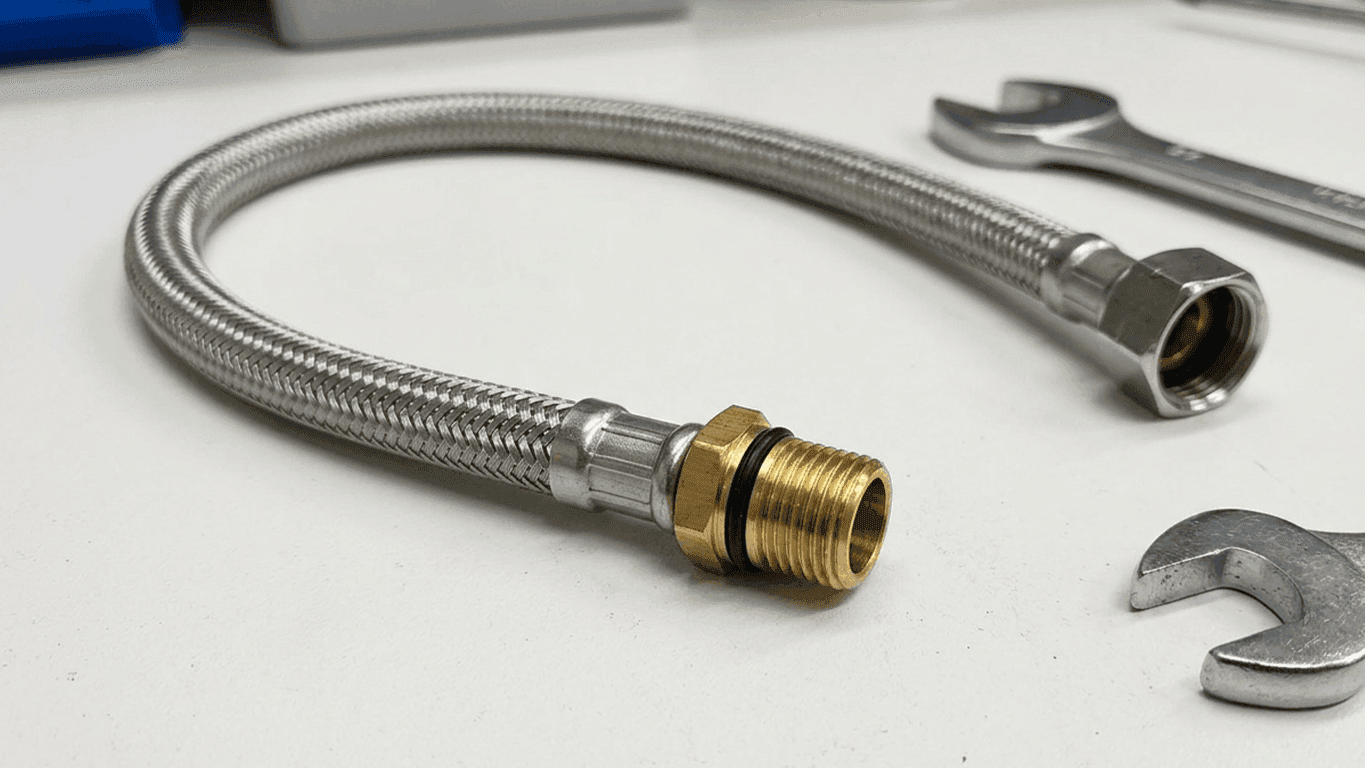
The tails are the two pipes hanging down from the base of a monobloc tap, one for hot and one for cold, that connect to your isolation valves. Most modern taps come with flexible tails included, braided hoses that bend to reach the valve without needing rigid pipework cut to an exact length.
Tail length matters if you're fitting a tap into a deep cabinet or an unusually positioned sink. Standard tails run around 300 to 500mm, and an extension is a cheap, simple fix if your existing valves sit further away than that.
Tap hole diameter and worktop thickness
Most sinks and worktops are pre-drilled with a standard 33 to 38mm hole for a monobloc tap, which the vast majority of taps are designed to fit through.
It's still worth double checking a specific tap's stated hole diameter against your sink's spec, particularly with taps that have unusually wide bases or built-in extras like a boiling water function.
Worktop or sink deck thickness matters too. Most standard fitting kits cope with up to around 40 to 45mm, but a thick stone or butcher block worktop sometimes needs an extended fitting kit, which isn't always included as standard and may need ordering separately.
Bath filler and bidet connections
Bath fillers often use a larger 3/4 inch BSP connection than a basin or kitchen tap, reflecting the higher flow rate they need to shift.
Bidets and some specialist fittings can use their own specific connection sizes too, so it's worth checking the exact spec on anything outside a standard kitchen or basin tap rather than assuming it matches.
Older homes: imperial and metric fittings side by side
Properties with older pipework sometimes have a mix of imperial fittings from decades ago alongside more recently added metric ones.
BSP threads themselves are imperial in origin but remain the near-universal UK standard regardless of the era of pipework, so this mostly affects the wider plumbing rather than the tap connection itself. Where it does cause an issue, a plumbers' merchant can supply the right imperial to metric adapter for a few pounds.
Practical tip
If you're at all unsure which connection size you need, take a photo and rough measurement of your existing tap's tails or your isolation valves to a plumbers' merchant. Getting a physical match confirmed in person avoids an expensive returns process for the wrong part.
How to measure what you've actually got
Turn off the water and remove the old tap, following our guide on removing an old tap if you haven't already, then measure the thread diameter on the isolation valves themselves with a tape measure, or callipers if you have a pair, since they give a more precise diameter reading.
Most hardware shops and plumbers' merchants can also match a thread by eye if you bring the old part in, which is often the quickest way to be certain.
Aerator and attachment thread sizes
Separately from the main tap connection, the aerator screwed into the end of the spout has its own, smaller thread standard, most commonly either 22mm male or 24mm female on UK taps, though this varies more between manufacturers than the main BSP connection does.
This matters if you're buying a replacement aerator or an attachment like a spray diverter, since fitting the wrong thread size simply won't screw on.
If you're not sure which size your spout uses, the safest approach is to remove the existing aerator and take it with you, or buy a universal adapter kit, sold cheaply by most hardware shops, that covers the handful of common sizes in one pack.
Why this matters more than people expect
Getting connection sizes right before you buy avoids one of the most common, entirely avoidable frustrations in any tap project: ordering online, waiting for delivery, and then discovering a fitting doesn't quite match. It's a five minute check that saves a returns process and a delayed installation.
This is particularly worth doing before buying online rather than in person, since a showroom or plumbers' merchant can usually confirm compatibility on the spot, while an online order relies entirely on the listing being accurate and you interpreting the spec correctly.
What fittings actually cost
Standard BSP fittings, adapters and extension tails are inexpensive, typically £3 to £15 each from any plumbers' merchant or hardware shop (figures from our last check). An extended fitting kit for a thick worktop usually adds £10 to £25 to a tap's total cost.
Truly non-standard connections are rare enough that, if you do hit one, it's often cheaper to have a plumber adapt the existing pipework than to hunt for an unusual part yourself.
A universal adapter kit covering the handful of common aerator and connector sizes is a sensible thing to keep in a toolbox regardless, since it's cheap and saves a trip to the shop the next time a fitting doesn't quite match.
Assumptions that catch people out
- Assuming every tap uses the same hole diameter. Most do, but taps with wider bases or extra functions sometimes need a larger cutout, so check before ordering.
- Not checking worktop thickness against the fitting kit. A standard kit often doesn't reach through a thick stone or butcher block worktop without an extension.
- Guessing tail length rather than measuring. A tail that's too short simply won't reach the isolation valve, and a cheap extension avoids the problem entirely if you check first.
- Assuming an older home has non-standard threads without checking. BSP has been the standard for decades, so this is rarely the actual problem, even in period properties.
- Buying a bath filler with the same connection size as a basin tap. Bath fillers often need the larger 3/4 inch BSP connection, not the standard 1/2 inch.
Once you're confident on sizing, our guide on installing a tap yourself covers the full fitting process, and our shortlist of kitchen taps lists connection details for every product we recommend.